

Pharmacy First England
Can Pharmacy First be delivered remotely? The delivery rules explained
Some Pharmacy First consultations can use video or telephone, but the service type, examination needs and pharmacy premises rules determine what is appropriate. Remote delivery permission is not approval of every remote staffing model.
Start with the type of consultation
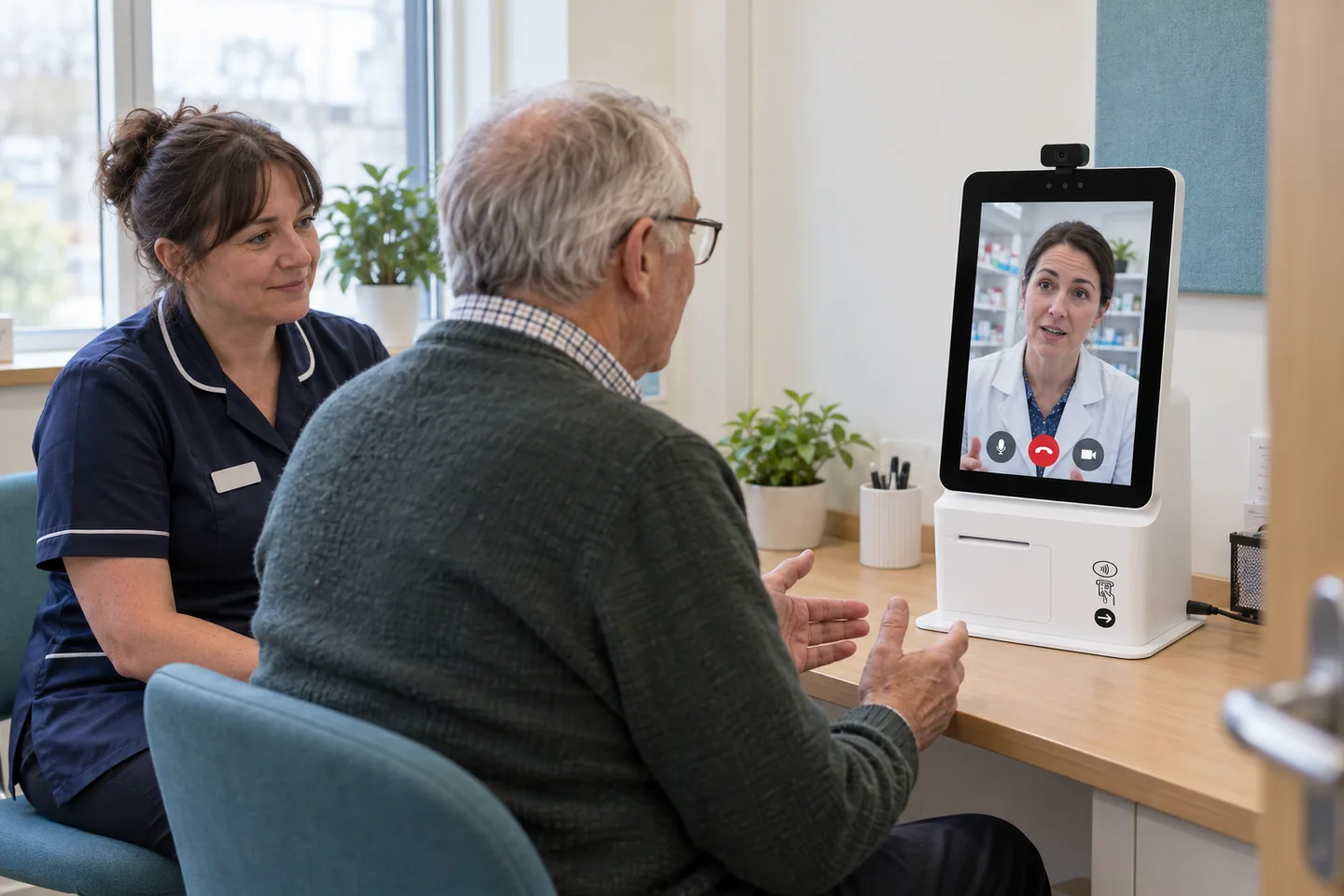
England's Pharmacy First service includes seven clinical pathways and two referral routes. CPE's guidance permits good-quality video for six of the existing pathways where the pharmacist can make an appropriate assessment. Acute otitis media needs an otoscope examination and is delivered in person. Minor-illness and urgent-medicine-supply referral consultations can use telephone or video where appropriate.
A booking system should identify the service before offering a channel. A patient selecting 'speak to a pharmacist' has not yet been assessed as suitable for a particular pathway. Explain that the pharmacist may need to change the consultation method or arrange another service after reviewing the patient's needs.
Which existing pathways can use video?
The six video-capable existing pathways cover sinusitis, sore throat, infected insect bites, impetigo, shingles and uncomplicated urinary tract infection within their specified eligibility criteria. This does not mean every patient presenting with one of those symptoms is suitable for remote assessment. The current pathway, professional judgement and the quality of the available information still govern the decision.
Do not add a routine urine-sample requirement simply because a consultation uses video. Follow the actual clinical pathway. Similarly, a close-up image or a connected peripheral does not independently authorise a remote version of a pathway whose current specification requires in-person examination. Technology must support the permitted assessment.
Read the premises rule precisely
CPE's Pharmacy First FAQ states that the pharmacist must be at the pharmacy premises when providing a remote consultation. That wording should not be broadened into a claim that working from any registered pharmacy is sufficient. Nor does it require the remote patient to be sitting in a second pharmacy: remote describes a consultation channel, not one prescribed patient location.
If a proposal puts the patient at one contractor's site and a pharmacist at another, document the actual arrangement. Identify the service provider, contract holder, clinician's engagement, relevant premises, record access, medicine supply and claiming responsibilities. Obtain an authoritative interpretation for that arrangement before relying on it commercially; a product demonstration cannot establish NHS contractual eligibility.
Make the room work for the patient
Good video is only one part of an accessible consultation. Check speech clarity, lighting, privacy, camera positioning and whether the patient can comfortably use the equipment. Offer appropriate assistance without making confidential information audible in the public pharmacy. Consider patients who need an interpreter, a carer, a hearing adjustment or an alternative channel.
Test the setup using realistic staff scenarios, including a patient who cannot reposition the camera and a connection that fails during an assessment. The resulting procedure should say who helps, how identity is rechecked if necessary, and how the pharmacist decides whether to continue. Avoid using a technical connection test as a substitute for service readiness.
Prepare the record and escalation routes
The clinical record, referral information and any required communication with the patient's GP remain part of the service. A video application and an NHS-assured clinical system perform different jobs. Make it clear where the authoritative consultation record sits and which team member is responsible for completing each action.
Before offering remote appointments, establish a route for patients who need an examination, a different service or urgent assessment. Staff should know how to act if the pharmacist cannot obtain sufficient information. The GPhC's distance-services guidance supports a risk-based approach; it does not give a software supplier a blanket approval to provide any clinical service.
Assess a supplier against the operating model
Ask a supplier to demonstrate the complete journey from referral to documented outcome, including an unsuccessful connection and a consultation that changes to in-person care. Separately check contractual eligibility with the appropriate service guidance and commissioning arrangements. Keeping these questions separate makes both discussions more productive.
For a group rollout, assess each site's room, staffing and workflow rather than assuming one successful demonstration establishes readiness everywhere. Use the superintendent's checklist to organise the review. The payments guide explains why eligible activity and monthly payment conditions should be modelled separately from appointment capacity.
Frequently asked questions
Can Pharmacy First be provided by telephone?
The existing clinical pathways require good-quality video where remote delivery is appropriate, except acute otitis media which requires in-person assessment. Minor-illness and urgent-medicine referral consultations may use telephone or video as appropriate.
Does a pharmacist working in another registered pharmacy automatically meet the rule?
No such conclusion follows from the premises wording alone. Check the actual contractor, premises and staffing arrangement against the service requirements before relying on it.
Can a video consultation always replace a face-to-face appointment?
No. Patient needs, the pathway and the information available determine whether remote assessment is appropriate. A practical route to in-person care is necessary.
Sources & further reading
Checked against the following sources on 1 October 2026. Service rules and payments can change; use the current specification and Drug Tariff when making decisions.
- Community Pharmacy England: Pharmacy First service
- Community Pharmacy England: Pharmacy First FAQs
- GPhC: guidance for pharmacy services at a distance, February 2025
- Community Pharmacy England: video consultations
This is business and service-planning information. It does not assess an individual patient, authorise a delivery model or replace local clinical and contractual decisions. Source checking is not a claim of independent clinical review.
Our editorial policy and corrections processReview your consultation-room workflow
See the patient and staff journey, then assess how it fits your service and governance requirements.