

NHS Pharmacy First
NHS Pharmacy First: pathways, fees, and the remote-delivery rules
Pharmacy First is an advanced service in England, launched 31 January 2024. Explore the seven clinical pathways, current fees and payment conditions, and the rules for remote video delivery. The planned prescribing extension has separate implementation requirements.
The seven clinical pathways
The seven Pharmacy First pathways and their age ranges.
| Clinical pathway | Age range | Remote delivery |
|---|---|---|
| Sinusitis | 12 years and over | Yes, live video |
| Sore throat | 5 years and over | Yes, live video |
| Infected insect bites | 1 year and over | Yes, live video |
| Impetigo | 1 year and over | Yes, live video |
| Shingles | 18 years and over | Yes, live video |
| Uncomplicated urinary tract infections | Women 16 to 64 years | Yes, live video |
| Acute otitis media (earache) | 1 to 17 years | In person (needs an otoscope) |
Payments
Pharmacy First and NHS service fees (2026/27).
These England service fees apply to eligible completed activity. Funding depends on the relevant service, documentation, claim rules and payment caps; appointment capacity alone does not generate a payment.
Pharmacy First consultation
£17 / £15
£17 eligible clinical pathway or minor illness; £15 urgent medicine supply referral. Conditions and caps apply.
New Medicine Service
£14 + £14
completed intervention and follow-up, subject to service eligibility and the monthly cap
Pharmacy Contraception
£25
initiation or continuation, plus £20 oral emergency contraception
Blood pressure check
£10
clinic check, or £50.85 for ABPM
Pharmacy First monthly payments. £500 for 20 to 29 qualifying clinical-pathway consultations a month, and £1,000 for 30 or more qualifying clinical-pathway consultations a month. Subject to Pharmacy First, contraception and hypertension registration and delivery conditions, with the specified distance-selling pharmacy exception. Minor-illness and urgent-supply referrals do not count. The announced prescribing extension will add qualifying IP pathways when implemented. See the full payment conditions and caps.
Illustration only: ten additional eligible £17 consultations each week for 52 weeks gives £8,840 in gross fees, assuming all fit within the payment allocation. This excludes delivery costs and monthly payments. Test your own assumptions.
Keep figures current. Checked against the October 2026 Drug Tariff and 2026/27 settlement, reviewed October 2026. Check current service rules before forecasting or claiming.
The question everyone asks
Can Pharmacy First be delivered remotely?
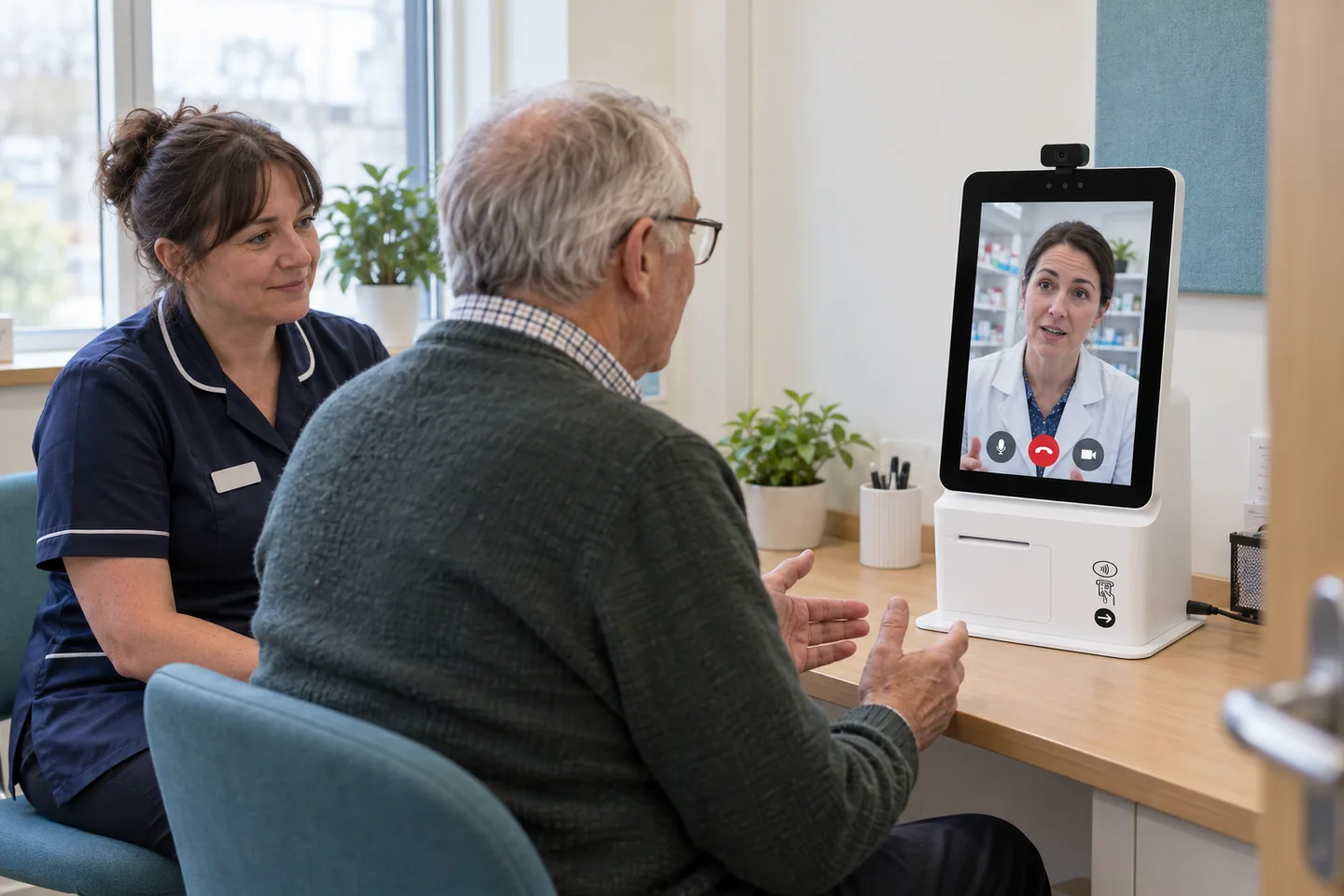
Yes, where appropriate and within the Pharmacy First service rules. Six clinical pathways can use good-quality video; acute otitis media requires an otoscope and an in-person assessment. Clinical pathways cannot be completed by telephone alone. Minor-illness and urgent-supply referral consultations have different remote-method rules.
The pharmacist must be at the pharmacy premises for remote Pharmacy First delivery. That does not establish permission for a shared hub to provide activity for other contractors or sites. Our proposed cross-site model remains subject to service-specific confirmation and local governance. Read the detailed delivery guide.
Remote Pharmacist supports the consultation workflow. Software, notes and audit do not by themselves establish eligibility or create an NHS claim. Agree the delivery arrangement and NHS-assured record and claiming route before use. See the proposed workflow.
Coming in 2026
Independent prescribing is being added to Pharmacy First.
The national NHS prescribing extension is planned for autumn 2026 in England. Five new pathway areas were announced in September: acute otitis externa, seasonal allergic rhinitis, acne, migraine, and mild skin and soft tissue infections including scabies. Final eligibility and treatment requirements belong in the service documents; the existing seven Pharmacy First pathways remain distinct.
Check implementation before delivery. Checked 1 October 2026: CPE still lists outstanding clinical guidance, updated specifications and formal sign-up arrangements. An announcement does not establish that a pharmacy can start delivering or claiming the extended service. Source: Community Pharmacy England (checked 1 October 2026). See the prescribing readiness guide.
Practical
Where a remote pharmacist fits in your Pharmacy First numbers.
Assess suitable remote capacity alongside your on-site staffing needs and agreed service model. See how a consultation works, or explore the service options.
Plan more consultation capacity
Assess where suitable remote sessions can support demand while maintaining essential on-site staffing.
Match capacity to demand
Compare agreed remote sessions with optional extra on-site cover, including their different duties and costs.
Standardise across sites
Consistent pathways, notes and audit help each site deliver more consultations reliably.
Pharmacy First FAQ
Common Pharmacy First questions.
What are the seven conditions covered by Pharmacy First?
Sinusitis, sore throat, infected insect bites, impetigo, shingles, uncomplicated urinary tract infections (women 16 to 64) and acute otitis media (earache).
How much does each consultation pay?
In England, eligible clinical-pathway and minor-illness referral consultations pay £17; urgent medicine supply referrals pay £15. Monthly payments are £500 at 20 to 29 qualifying clinical-pathway consultations and £1,000 at 30 or more, subject to registration and delivery conditions. Payment caps and claim rules also apply.
Can Pharmacy First be delivered over video?
Six clinical pathways can use good-quality video where appropriate, with the pharmacist at the pharmacy premises. Telephone alone is not sufficient. Acute otitis media requires in-person assessment with an otoscope. A cross-site hub arrangement needs separate confirmation; the general video rule does not authorise it.
Do you replace our Responsible Pharmacist?
No. In our model your Responsible Pharmacist stays on the premises. Remote Pharmacist adds a consultation clinician; it does not replace your RP or provide remote supervision of dispensing.
How do referrals into Pharmacy First work?
Patients can walk in or self-refer for the seven clinical pathways. Minor-illness and urgent-medicine-supply strands require an eligible electronic referral. Referral routes differ: general practices can refer minor illness, but cannot refer patients into the urgent-supply strand.
Is independent prescribing part of Pharmacy First?
The national NHS prescribing extension is planned for autumn 2026 in England. Five new pathway areas were announced in September: acute otitis externa, seasonal allergic rhinitis, acne, migraine, and mild skin and soft tissue infections including scabies. Final eligibility and treatment requirements belong in the service documents; the existing seven Pharmacy First pathways remain distinct. Checked 1 October 2026: CPE still lists outstanding clinical guidance, updated specifications and formal sign-up arrangements. An announcement does not establish that a pharmacy can start delivering or claiming the extended service.
See how many consultations you could add
Use the calculator to size the upside, or request a walkthrough to see the model against your own sites.