

Pharmacy First England
Independent prescribing and Pharmacy First: the October 2026 position
The new prescribing pathways have been announced. Implementation still depends on the published service documents, sign-up arrangements and each pharmacy's readiness. Here is what owners can plan now.
What has changed since the summer
The earlier summer position was that the new conditions were still being selected. That is no longer current. September's announcement identified five new prescribing pathway areas. CPE lists acute otitis externa for adults, seasonal allergic rhinitis for children aged 4–11, mild to moderate acne for young people, low-frequency episodic migraine for adults aged 18–64, and mild skin and soft tissue infections and scabies.
These labels describe the announced scope, not a complete clinical protocol. Eligibility, exclusions, examination requirements and treatment decisions belong in the final pathway documents. In particular, the new outer-ear pathway should not be confused with the existing acute otitis media Pharmacy First pathway.
Announced scope is different from a service starting
CPE's prescribing implementation page, checked on 1 October, says the updated Pharmacy First and contraception specifications and relevant clinical guidance have not yet all been published. It expects an NHSBSA sign-up form during October, subject to the necessary preparatory work. A calendar month alone therefore does not establish that a pharmacy can start claiming.
Give one member of the implementation team responsibility for checking the final documents and recording their version. Before advertising appointments, confirm the service start arrangements, the pharmacy's registration, the individual prescriber's readiness and the clinical system's ability to support the work. Avoid building a launch date around a supplier presentation that predates the final specification.
What the funding announcement means for planning
The announced funding includes £500 for setup and £525 monthly infrastructure support. CPE says setup payment requires service sign-up and a confirmed go-live date with an NHS-assured Electronic Prescribing Service system. Monthly support requires at least 24 hours of prescriber availability per week, with caveats still to be detailed in the Tariff. These are conditional service payments, not an unrestricted equipment grant. Check the final participation and payment rules before forecasting receipts.
A useful budget separates preparation from delivery. Preparation includes protected training time, governance work, record access, room readiness and changes to local procedures. Delivery includes consultation time, supervision or support arrangements where required, medicine handling and administration. Keep an unconfirmed funding line in a separate scenario so it does not conceal the cost of getting ready.
Prescriber status is only the first check
An independent prescriber still needs to work within their competence and within the particular commissioned service. NHS England's readiness guidance sets out assurance work for pharmacy owners, prescribers and integrated care boards. A professional qualification does not by itself confirm that a site is ready to offer every new pathway.
Build a readiness register with named owners and evidence: who will prescribe, which clinical areas they can cover, how records are accessed, who supports decisions, and how patients move to another service when necessary. Test a realistic referral and record-sharing journey before testing appointment volume. The first question is whether the clinical process is complete.
Do not inherit remote rules by assumption
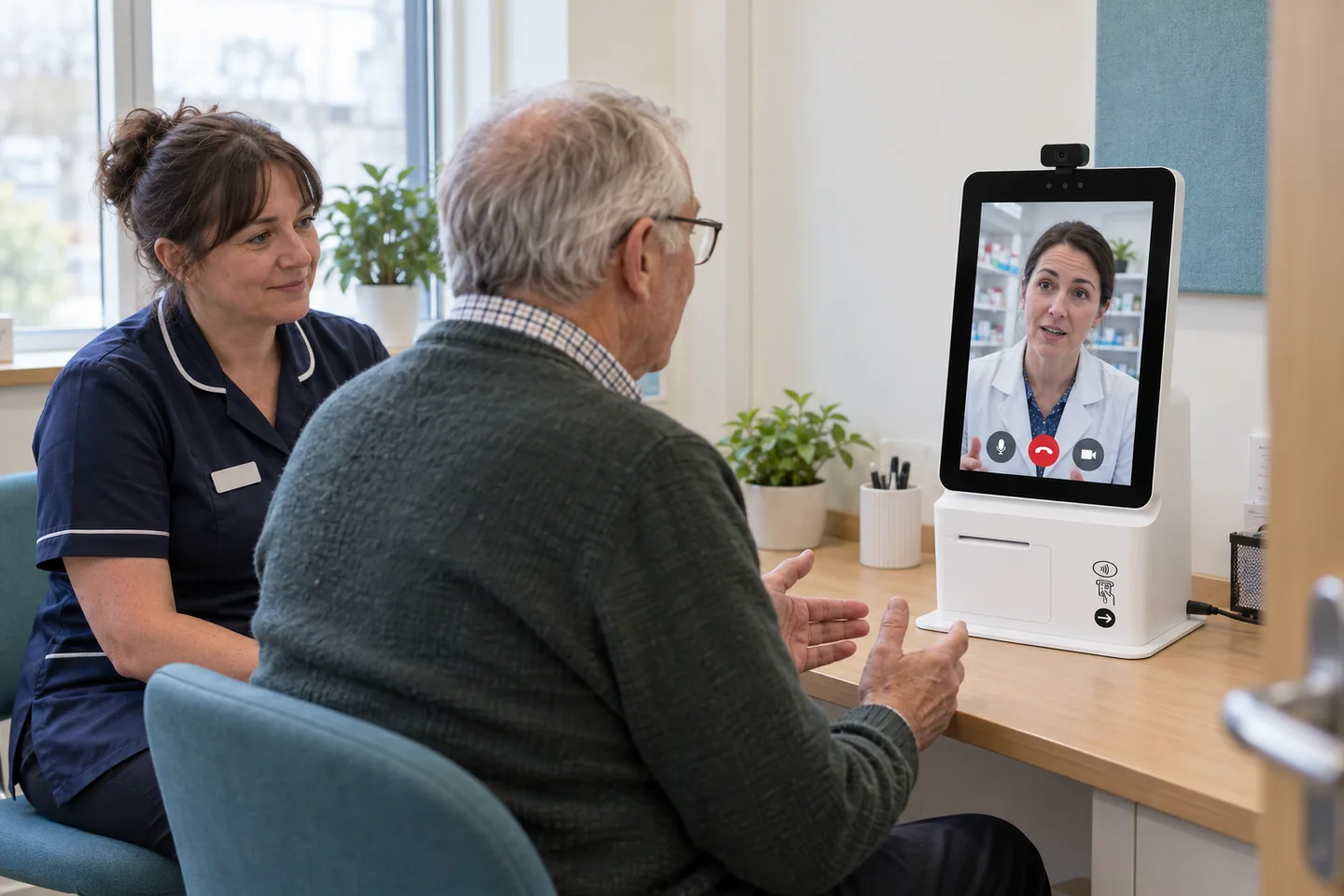
Existing Pharmacy First video permissions should not simply be copied into a new prescribing pathway. A new service may require an examination, information or local assurance arrangements that change the delivery model. Confirm the final specification for each pathway and the premises and contractual position of any proposed off-site clinician.
This matters when a patient attends one pharmacy and the consulting prescriber works elsewhere. A video connection can support communication; it does not determine which NHS contractor provides the service or who can claim. Ask a proposed supplier to map those responsibilities explicitly, using the final documents and the actual employment or contracting arrangement.
What owners can usefully do now
Start with the rooms, workforce and demand you already have. Identify appointment periods that will not undermine existing services, discuss record-sharing and escalation with local partners, and prepare patient information that can be updated when the final scope is available. Keep public wording specific about what patients can currently book.
Set a short implementation checklist with an owner and evidence link for each item. The decision to open bookings should follow completion of that checklist. Review income assumptions after the first operating period using eligible completed activity, time spent and the actual payments received, rather than assuming every available slot becomes a funded consultation.
- Track the final NHS England specifications and NHSBSA sign-up route.
- Confirm site and prescriber assurance with the relevant local arrangements.
- Check the clinical system, records, medicines and escalation process.
- Approve patient-facing information only against services actually available.
Frequently asked questions
Have the new prescribing pathways been named?
Yes. The five announced areas cover acute otitis externa; seasonal allergic rhinitis; acne; migraine; and mild skin and soft tissue infections and scabies. Final pathway documents govern the detailed clinical scope.
Is the national extension operational everywhere from 1 October?
That cannot be assumed. On 1 October CPE still identified outstanding documents and sign-up arrangements. Check the current official implementation position and your pharmacy's readiness.
Does the infrastructure payment cover a Remote Pharmacist terminal?
It is not a product-specific grant. Any purchasing decision must fit the actual service budget, participation conditions and approved operating model.
Sources & further reading
Checked against the following sources on 1 October 2026. Service rules and payments can change; use the current specification and Drug Tariff when making decisions.
- Community Pharmacy England: prescribing within the CPCF
- NHS England: preparing for prescribing in national community pharmacy services
- NHS England: commissioning pharmacy prescribing-based services
- DHSC: Community Pharmacy Contractual Framework 2026 to 2027
- NHSBSA: current Drug Tariff and amendments
This is business and service-planning information. It does not assess an individual patient, authorise a delivery model or replace local clinical and contractual decisions. Source checking is not a claim of independent clinical review.
Our editorial policy and corrections processPlan your consultation capacity
Explore the room and workflow requirements for your current services and future prescribing plans.