

Funding & services England
Locally commissioned pharmacy services: finding and assessing funding
Local commissioning can create worthwhile pharmacy services, but there is no universal local fee or automatic technology subsidy. Assess the actual service specification and commissioner before investing.
Begin with the local need and commissioner
Alongside national pharmacy services, local arrangements can commission pharmacies to meet specific population needs. Integrated care boards and local authorities have different responsibilities and budgets. A locally commissioned stop-smoking or sexual-health service should not be confused with a national advanced service just because both involve similar patient needs.
Start with your Local Pharmaceutical Committee and the relevant commissioner. Ask for the current service specification, participation route and named contract contact. CPE's local service resources can help identify examples, but a database entry is not confirmation that a scheme is still open to new providers or funded for the coming year. Check the position in your own area.
Read the contract before forecasting demand
Identify the eligible population, referral routes, exclusions, opening-hours expectations and permitted delivery locations. Determine whether the pharmacy can enrol itself, needs approval or must participate in a procurement process. Check the start and end dates, any activity ceiling and the conditions for renewal or termination.
Translate this into a one-page service summary for the decision-maker. It should say who receives the service, what the pharmacy must deliver, who can provide it and how the commissioner verifies completion. A persuasive description of local need is useful, but it does not answer those operational questions. Keep an unsigned opportunity separate from commissioned work in the financial plan.
Separate the different types of payment
Local contracts may use activity fees, fixed payments, outcome-linked payments or specific implementation support. There is no single national fee that can safely be copied across all ICB-commissioned services. Read what triggers payment and whether medicines, equipment, training or administration are included in the stated amount.
Create a cost model using the actual offer. Show one-off preparation costs separately from ongoing staff time, room use, consumables and reporting. Include likely unpaid activity such as unsuccessful contacts or work outside the eligibility rules. If there is setup funding, confirm whether it is restricted, recoverable or conditional on a minimum period of service. Do not describe it as a guaranteed terminal grant.
Agree the clinical and information arrangements
For pharmacy prescribing services, NHS England's commissioning guidance sets out the importance of appropriate clinical scope, workforce and governance. A prescriber's qualification alone does not define an entire commissioned service. The provider and commissioner need a workable arrangement for access to information, communication and escalation.
Map the patient's journey from referral to outcome and identify where another organisation must act. Agree the record system, the information required for a referral, who receives the result and how urgent concerns are handled. Include consent, privacy and access controls in that discussion. A small service with a reliable handover is more useful than a large appointment plan with an unresolved route back to the patient's usual care.
Confirm technology and remote-delivery requirements
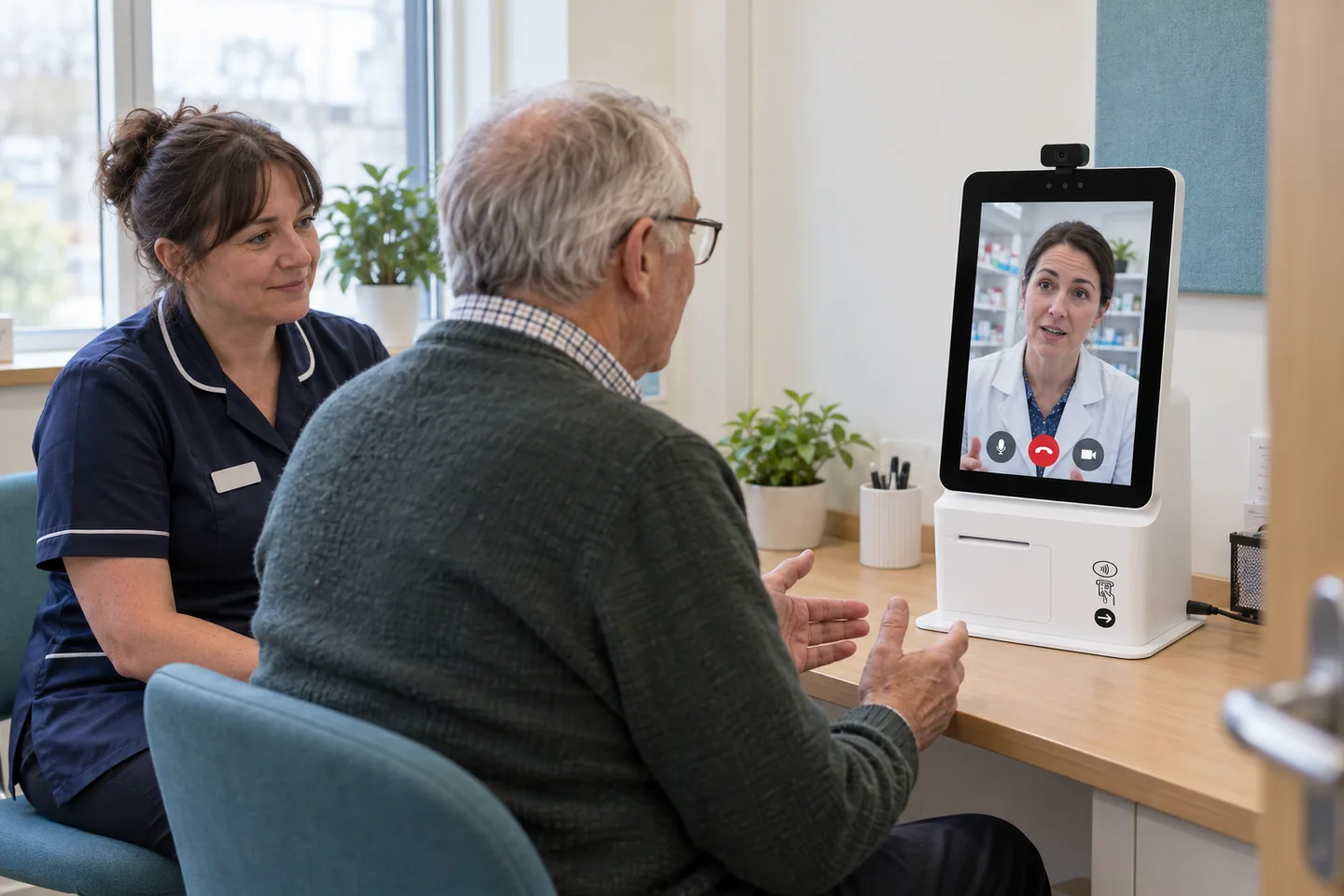
Ask which clinical systems, reporting formats and connectivity arrangements the contract requires. A video terminal may support communication, but it cannot determine whether remote assessment is permitted or replace an examination required by the specification. Check where the patient and clinician may be located and whether any proposed subcontracting needs consent.
Evaluate suppliers against those requirements using a realistic demonstration. Include a failed connection, a patient needing assistance and an encounter that must move to in-person care. Confirm who owns equipment and records at the end of the contract, how information remains accessible and what happens if the service closes. These points affect the total cost as much as the headline monthly price.
Pilot against measures the commissioner can use
Agree a small set of measures before launch: eligible referrals, time to contact, completed episodes, reasons for non-completion, onward referrals and patient experience where appropriate. Specify reporting responsibilities and submission dates. Use the same definitions in your internal dashboard and the commissioner's report so activity is not counted differently by each organisation.
Review the first operating period with the relevant service lead and partners. Adjust the appointment capacity around actual demand and the time needed for safe completion. Keep a dated copy of the contract and any agreed variations. Expansion to another branch or area should trigger a fresh check of participation and local arrangements, even when the technology and staff training look similar.
Frequently asked questions
Is there a national ICB payment for a remote pharmacy terminal?
There is no universal entitlement described by these sources. Any equipment support must be established in the specific local funding agreement and its conditions.
Can we use another area's service specification?
It can be a useful example, but it is not your contract. Confirm the commissioned service, participation route and funding terms with your own commissioner.
Are all local pharmacy services commissioned by the ICB?
No. Local authorities and other organisations may commission services too. Identify the actual commissioner and distinguish the arrangement from national pharmacy services.
Sources & further reading
Checked against the following sources on 1 October 2026. Service rules and payments can change; use the current specification and Drug Tariff when making decisions.
- Community Pharmacy England: locally commissioned services
- NHS England: commissioning pharmacy prescribing-based services
- NHS England: preparing for prescribing in national community pharmacy services
This is business and service-planning information. It does not assess an individual patient, authorise a delivery model or replace local clinical and contractual decisions. Source checking is not a claim of independent clinical review.
Our editorial policy and corrections processAssess technology against your service specification
Bring the proposed patient journey and delivery requirements to a focused demonstration.