

Funding & services England
NHS pharmacy Smoking Cessation Service: referrals and funding
The national pharmacy Smoking Cessation Service continues support started in hospital. Its referral route, treatment continuity and review process need to be in place before a pharmacy forecasts income.
Know which stop-smoking service you are offering
England's national community pharmacy Smoking Cessation Service supports eligible adults continuing a quit attempt after discharge from hospital. An NHS trust refers the patient to their chosen participating pharmacy. This is different from a local authority or other locally commissioned service that may accept people through different routes.
Train the counter team to recognise the difference. Someone asking for help to stop smoking should receive appropriate advice and signposting, but their enquiry does not automatically become a claim under the national advanced service. Check the referral and service eligibility before creating a funded episode, and use accurate patient-facing wording about the support your pharmacy actually provides.
Use the current fee structure
The October 2026 Tariff provides £30 for the first consultation, £10 for each eligible interim consultation and £40 for the last consultation. Eligible contractors may receive a £1,000 one-off setup payment under the registration and readiness conditions. Eligible medicine reimbursement is separate from those consultation fees.
An illustrative completed episode with a first consultation, three eligible interim consultations and a last consultation would generate £100 in consultation fees before costs. That is not a standard required appointment schedule: the actual reviews must follow the patient's needs and the service specification. Do not book unnecessary contacts to fit a financial example, and do not treat patients lost to follow-up as completed episodes.
Make hospital-to-pharmacy transfer reliable
Agree who checks for electronic referrals and how a new referral is accepted into the worklist. The team needs the hospital information, relevant treatment history, quit date and next actions specified by the service. Set out how incomplete referrals are resolved and how the patient is contacted through the appropriate process.
The first conversation should continue the established care plan rather than start an unrelated programme because the patient has moved organisations. Record what has already happened and any information still needed. Maintain contact routes back to the referring team so a missing detail does not become a long delay or a repeated request for the patient to explain their hospital care.
Plan continuity, not just the first appointment
The service involves continuing support over the specified treatment period. Make future review capacity visible when accepting a referral, and plan cover for staff absence. The final consultation has its own timing and recording requirements; an arbitrary last phone call should not be used to declare an episode complete.
Use a simple worklist showing the current stage, next agreed contact and outstanding actions. Review missed appointments in a way that supports re-engagement where appropriate. Include stock availability, the authorised supply route and the required record keeping in the workflow. Clinical decisions and medicine choices must follow the current specification and authorisations, rather than a funding article.
Check what remote support can actually do
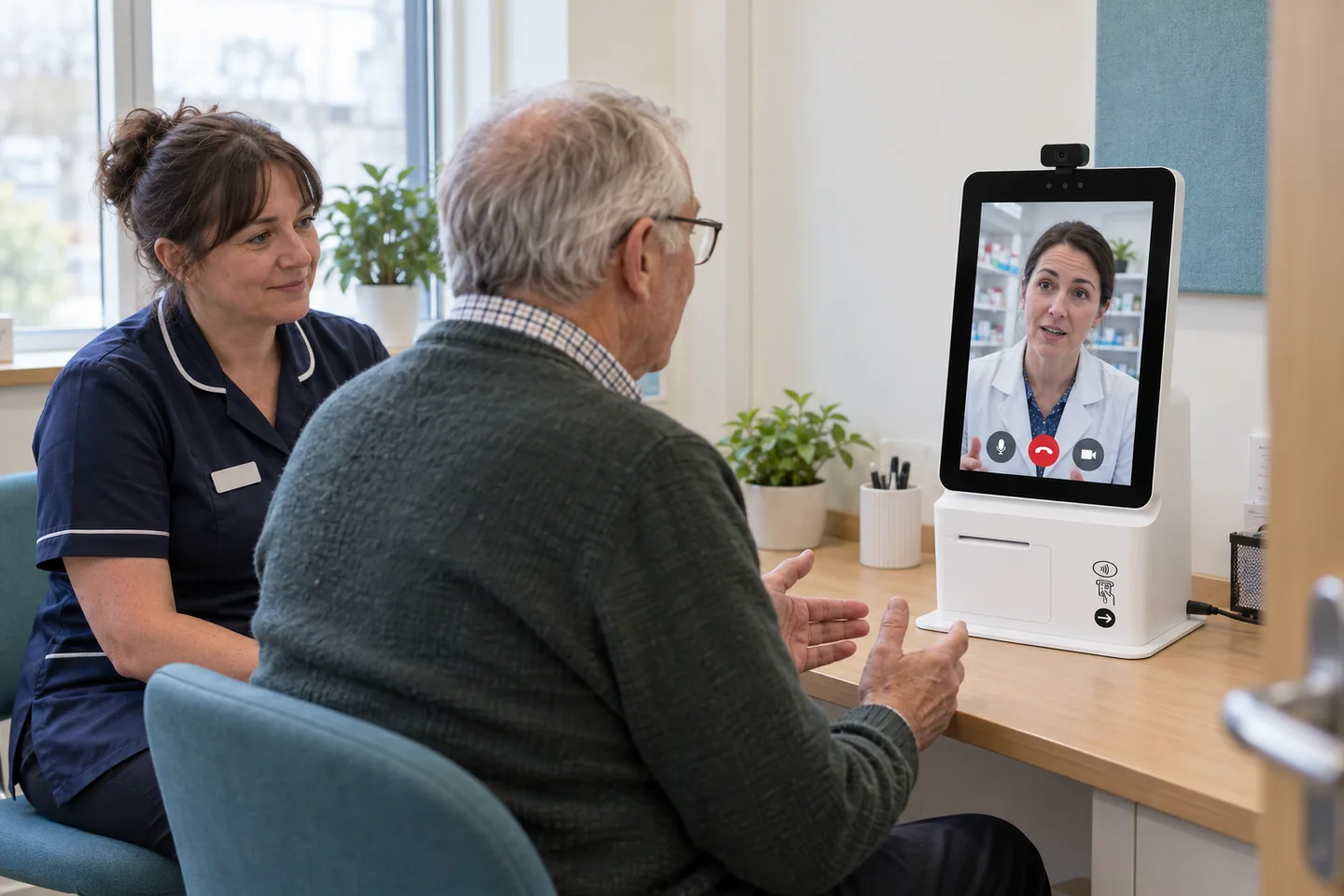
Telephone or video may be appropriate for a consultation when the patient agrees and the service requirements can be met. A private conversation and continuity of support can be valuable, but some activities, such as a required physical measurement, need an appropriate in-person arrangement.
Decide how the patient will access those activities before describing an episode as wholly remote. Staff should know how to change the channel when communication or clinical needs make that necessary. If a separate provider is proposed, verify the clinical, contractual and record-sharing responsibilities for that specific arrangement. Purchasing a terminal does not itself enrol a pharmacy in the service or make its consultations payable.
Distinguish planned changes from today's rules
As checked on 1 October 2026, CPE describes further workforce and medicine changes as being developed, with final documents still required. NHSBSA's update also directs pharmacies to the final NHS England arrangements. Do not expand staff roles or assume a new PGD is usable on the strength of an announcement or draft.
Have the service lead check the current documents before changing procedures, training or public information. Review claims against completed eligible contacts and reconcile payments through the required process. If local referral volumes are low, discuss the pathway with the relevant partners rather than forecasting income from every smoker in the area. The local commissioning guide explains how a separate service would need its own contract and funding terms.
Frequently asked questions
Can we claim the national fee for any walk-in smoker?
No. The national advanced service has an NHS trust referral route and specific eligibility. A locally commissioned stop-smoking service may have different rules.
Does every patient generate £100?
No. £100 is only the illustration in this article with three eligible interim consultations and completion of the other stages. Actual payable activity depends on the service delivered and its rules.
Can announced new medicines or staffing roles be used immediately?
Only when the applicable final specification, training and authorisations permit them. Check the current official implementation documents before changing delivery.
Sources & further reading
Checked against the following sources on 1 October 2026. Service rules and payments can change; use the current specification and Drug Tariff when making decisions.
- Community Pharmacy England: Smoking Cessation Service
- NHSBSA: Smoking Cessation Service update
- NHSBSA: October 2026 Drug Tariff, England service payments
- NHSBSA: current Drug Tariff and amendments
This is business and service-planning information. It does not assess an individual patient, authorise a delivery model or replace local clinical and contractual decisions. Source checking is not a claim of independent clinical review.
Our editorial policy and corrections processPlan the complete patient journey
Discuss how your room and communication workflow can support a properly commissioned service.