

Funding & services England
Discharge Medicines Service funding and safer pharmacy handovers
DMS starts with a hospital referral and follows the patient through their first medicines supply after discharge. Good handovers and visible outstanding actions matter more than simply adding a consultation slot.
Start with the discharge referral
The Discharge Medicines Service helps reconcile medicines and support patients after leaving hospital. It is an essential community pharmacy service in England, rather than a general review that a pharmacy can relabel for payment. The referral and subsequent work need to meet the DMS requirements.
Give incoming referrals a clear owner and a monitored route into the pharmacy workflow. The team should be able to identify new referrals, those awaiting information and those with actions that need attention. Agree cover for the usual reviewer being away. An unread referral inbox can leave the service incomplete even when the pharmacy has spare consultation capacity.
Keep the three stages connected
In broad terms, stage one reviews the hospital discharge information and medicines changes; stage two considers the first prescription received after discharge; and stage three checks the patient's or carer's understanding and use of their medicines. The NHS England toolkit provides the detailed requirements and professional responsibilities.
Build the process around those transitions. Link the discharge information to the dispensing workflow so the first new prescription triggers the relevant check. Ensure the professional having the patient conversation can see earlier findings and unresolved questions. Avoid treating three separate entries in a diary as proof that the full service has happened. The record should show what was checked and what action followed.
Apply the completed and partial fees correctly
The October 2026 Tariff pays £35 for a completed DMS. Where the specified circumstances justify a partially completed service, the stage values are £12 for stage one, £11 for stage two and £12 for stage three. These are not a general invitation to select only the convenient stages or claim early while further work is still intended.
For a simple example, ten eligible completed services produce £350 before delivery costs. Report any partial services separately with their reason, rather than treating them as ten full services. The historic £400 startup funding applied to the original rollout period; it is not a current automatic grant for a new terminal or an additional branch.
Make every handover actionable
A handover should identify the question, the person or team expected to resolve it and how the answer returns to the pharmacy. 'Contact GP' is less useful than a documented action with its status and owner. Use the service's clinical requirements to determine urgency, and maintain the appropriate escalation route where the information is incomplete or a concern cannot wait.
Test how the hospital referral connects to local general practice and the patient's usual pharmacy. Where another team needs to act, record that the information was sent and what remains unresolved. Do not infer that a message being transmitted means the clinical issue has been dealt with. Review overdue actions as part of the daily worklist.
Use the consultation channel to support continuity
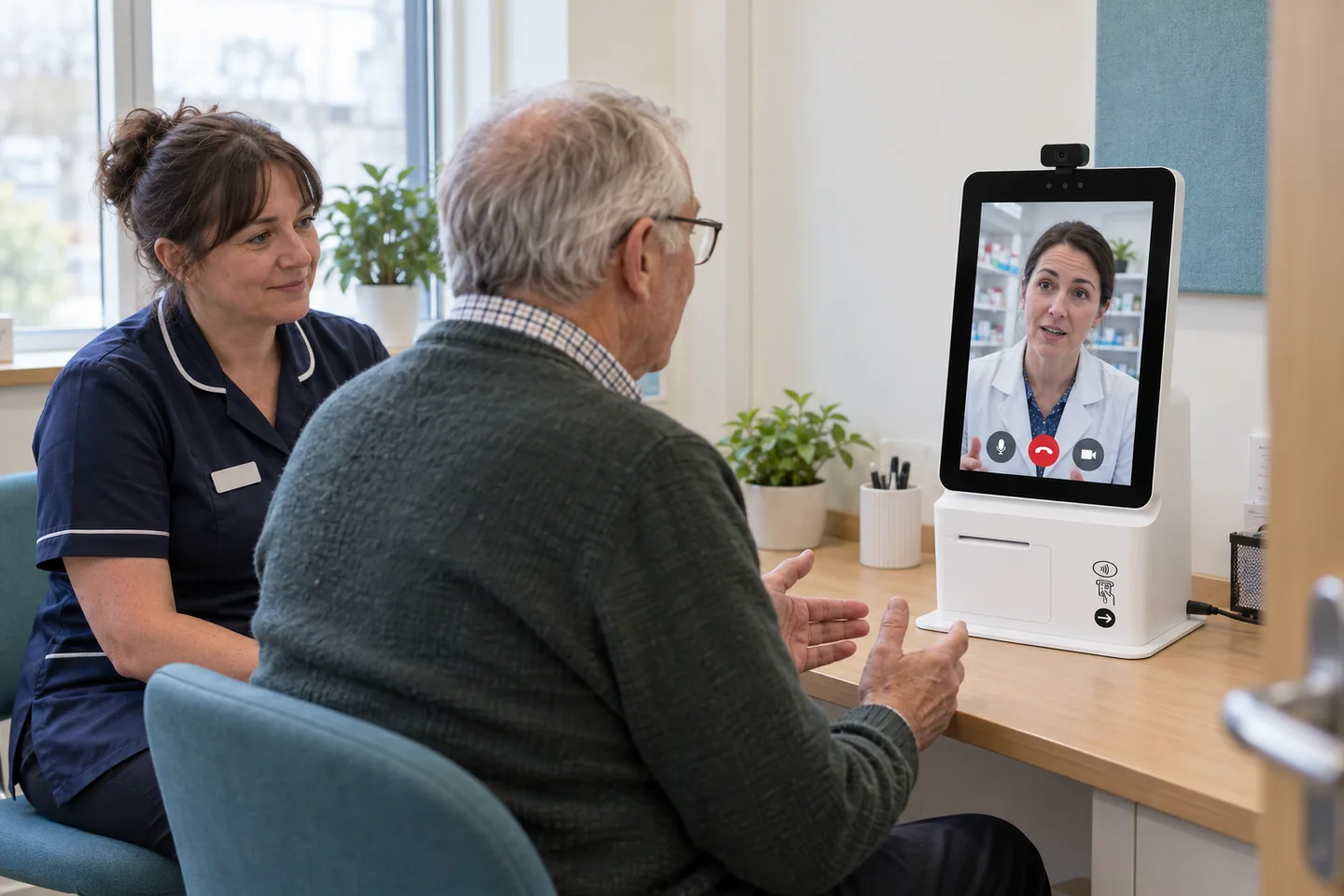
A suitable telephone or video conversation can help a patient who finds returning to the pharmacy difficult. The choice should reflect their needs, privacy, communication preferences and the information the professional needs. Establish whether a carer is involved and how that involvement is recorded appropriately.
Remote communication is one component of DMS. It does not remove the need to review discharge information, check the prescription or maintain the required professional and contractual responsibilities. If considering external support, map precisely which task is proposed and confirm the arrangement before building it into the service. Follow-up capacity is useful only when it connects to the rest of the patient's record.
Review completion and payment together
A monthly review should distinguish referrals received, stage-one reviews, prescriptions awaiting a check, patient discussions outstanding, completed services and justified partial completions. This makes bottlenecks visible without encouraging staff to treat a claim as the goal of the clinical process.
Submit the claim through the required NHSBSA route when the service or eligible final stage is complete, using the current deadlines. Reconcile it with the payment received. Include time spent obtaining missing information and communicating with other teams in the operating cost. If a patient also qualifies for NMS, check the separate requirements rather than assuming the same conversation can automatically be billed as both services.
Frequently asked questions
Is DMS paid at £35 for every hospital referral?
No. £35 is for a completed eligible service. Receiving a referral is the start of the workflow; specified partial-completion circumstances have separate stage values.
Can we claim one stage while planning to finish the others?
Do not use partial-payment rules simply to claim early. Follow the current Tariff and NHSBSA instructions for a completed service or an eligible partial completion.
Is there a new £400 DMS equipment grant?
The £400 startup payment was associated with the original rollout period. It should not be presented as a current automatic grant.
Sources & further reading
Checked against the following sources on 1 October 2026. Service rules and payments can change; use the current specification and Drug Tariff when making decisions.
- Community Pharmacy England: Discharge Medicines Service
- NHSBSA: Discharge Medicines Service
- NHS England: Discharge Medicines Service toolkit
- NHSBSA: October 2026 Drug Tariff, England service payments
- NHSBSA: current Drug Tariff and amendments
This is business and service-planning information. It does not assess an individual patient, authorise a delivery model or replace local clinical and contractual decisions. Source checking is not a claim of independent clinical review.
Our editorial policy and corrections processConnect the consultation to the wider workflow
Review referral handling, patient communication and outstanding actions before adding appointment capacity.