

Funding & services England
NMS funding, eligibility and delivery: a pharmacy owner's guide
The New Medicine Service pays for completed conversations with eligible patients. A reliable workflow starts with medicine eligibility and ends with a completed follow-up, an accurate record and a checked claim.
Identify eligible patients before booking
NMS is an advanced service in England for people starting specified new medicines for eligible conditions. The current scope includes depression following the October 2025 expansion. Eligibility depends on the service specification and medicine list, not simply whether a patient is collecting a prescription for the first time from your branch.
Build identification into the dispensing workflow, with a pharmacist confirming eligibility before an appointment is offered as NMS. A medicine supplied elsewhere previously may be new to the pharmacy without being new to the patient. A dose increase is not automatically a qualifying new medicine. Explain the purpose of the service in plain language and record the patient's agreement through the required process.
Understand what earns the fee
The October 2026 Drug Tariff sets a £14 fee for each completed intervention and a further £14 for each completed follow-up. Both completed stages therefore produce £28 in consultation fees. The engagement stage, unsuccessful attempts to contact the patient and a patient declining the service do not create those fees.
For example, 20 completed interventions and 15 completed follow-ups produce 35 × £14 = £490 before costs, assuming all activity is eligible and within the applicable cap. Do not replace this with 20 × £28 unless every follow-up is also completed and claimable. This simple distinction gives a more useful forecast and reveals where patients are dropping out of the service.
Use the current monthly cap
Use the prescription-volume bands in the current Tariff to find the combined intervention and follow-up cap. The Tariff describes a 0.9% framework, but its table doubles the consultation counts so both stages can be claimed. For example, the 4,501–5,500 prescription-item band allows 90 completed stage consultations at £14 each. Do not calculate 0.9% or 1% of items and treat that result as the payable stage count.
Give the person checking claims access to the appropriate dispensing-volume and service data. Track consultations by stage, month and site. If a group has several branches, assess the relevant contractor limits individually instead of treating every branch's activity as one undifferentiated total. Investigate unexpected changes before submitting the monthly claim.
Match remote delivery to the staffing rules
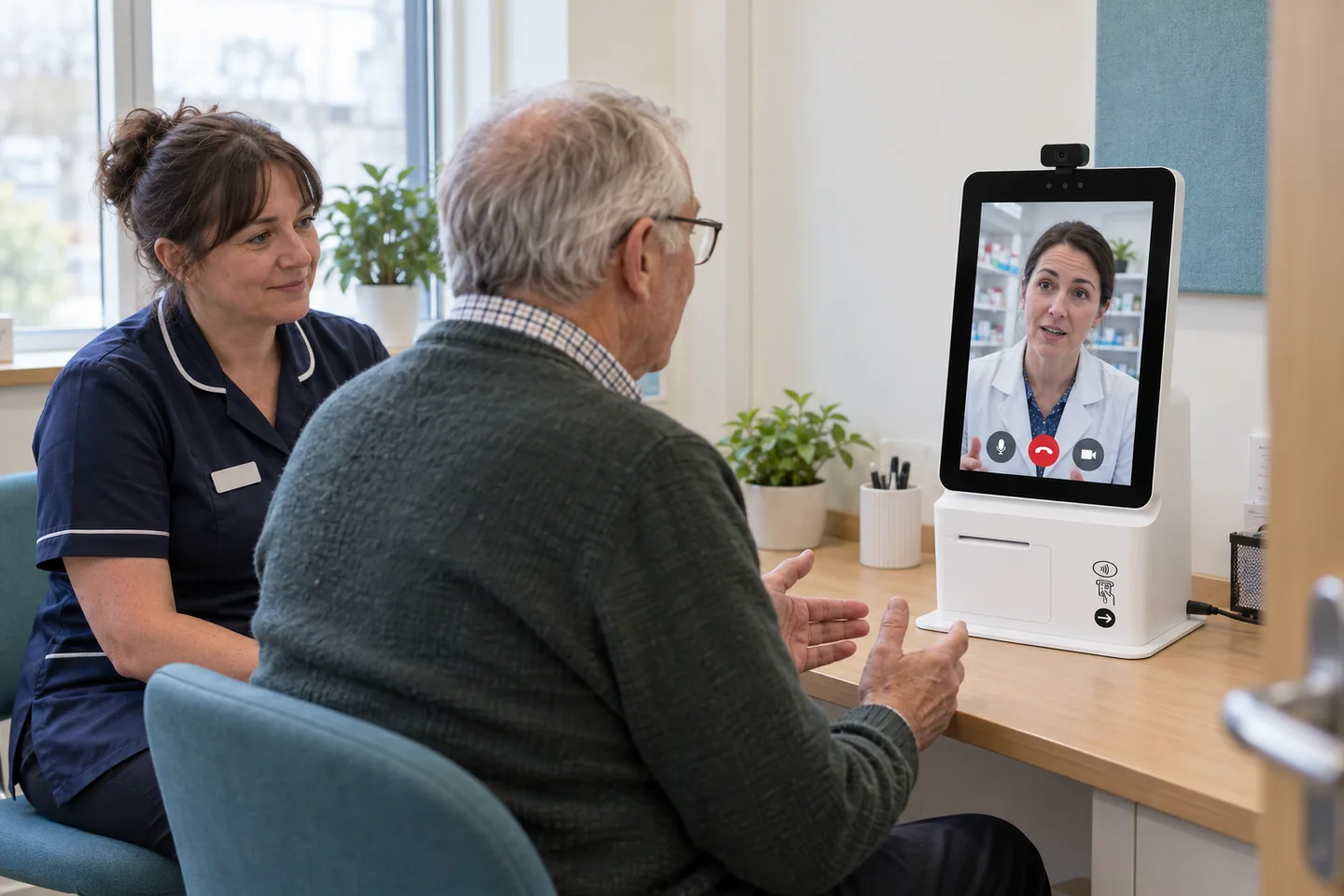
Telephone and video can support an appropriate NMS conversation. Off-site delivery requires an employee of the pharmacy owner or a company in the qualifying corporate group, with access to relevant records. Third-party off-site subcontracting is not permitted. Check that the corporate relationship meets the defined requirement rather than relying on a commercial partnership being described as a group.
Before purchasing extra remote capacity, write down the proposed employment relationship and location. Have the service lead check it against the current requirements. A terminal, a secure connection or a clinician's professional registration does not independently establish eligibility. Our remote delivery comparison explains why NMS and contraception need separate decisions.
Protect the follow-up time
The operational bottleneck is often continuity rather than finding people who might benefit. Agree a contact method and suitable time while the patient is engaged. Reserve follow-up capacity as well as first appointments, and make it clear which colleague owns the next action when the original pharmacist is unavailable.
Use a short worklist showing the stage, due action and responsible person without exposing unnecessary patient information. The clinician needs the relevant medicine history and earlier discussion, not merely a calendar invitation. Review missed contacts to understand practical barriers such as unsuitable appointment times, an incorrect number or a patient who needs another way to communicate.
Close the record and reconcile the claim
A useful monthly review compares eligible starts, completed interventions, completed follow-ups, unsuccessful contacts and claims submitted. These measures distinguish clinical workload from funded activity and show whether a process change has actually improved completion. Avoid setting a target that encourages staff to prioritise a fee over patient suitability.
Submit claims through the required route by the current deadline and check the NHSBSA payment against your records. Keep staff time, administration and technology costs in the service budget. NMS income is not an automatic terminal subsidy, and projected income should only include a delivery arrangement that meets the service rules. Use a small, well-organised caseload to test the workflow before increasing appointment availability.
Frequently asked questions
Is NMS always £28 per patient?
£28 is the total for a completed intervention and follow-up. Each eligible completed stage pays £14; attempts or incomplete stages are not automatically payable.
Can several new medicines generate several fees in one NMS conversation?
Do not assume a fee per medicine. Apply the current NMS consultation and claiming rules, including guidance for patients starting more than one eligible medicine.
Can a remote video provider bypass the off-site NMS restrictions?
No. The technology does not change the service's employment, group and record-access requirements.
Sources & further reading
Checked against the following sources on 1 October 2026. Service rules and payments can change; use the current specification and Drug Tariff when making decisions.
- Community Pharmacy England: New Medicine Service
- Community Pharmacy England: NMS subcontracting rules
- Community Pharmacy England: NMS myth-busting
- NHSBSA: October 2026 Drug Tariff, England service payments
- NHSBSA: current Drug Tariff and amendments
This is business and service-planning information. It does not assess an individual patient, authorise a delivery model or replace local clinical and contractual decisions. Source checking is not a claim of independent clinical review.
Our editorial policy and corrections processReview your service capacity
Map your current patient journey and workforce arrangements before deciding where technology could help.