

For pharmacy groups England
How to evaluate a remote consultation pilot across a pharmacy group
A pilot should answer a decision you cannot yet make confidently. This planning guide sets out how to compare the starting position with a limited change, without presenting assumptions as results.
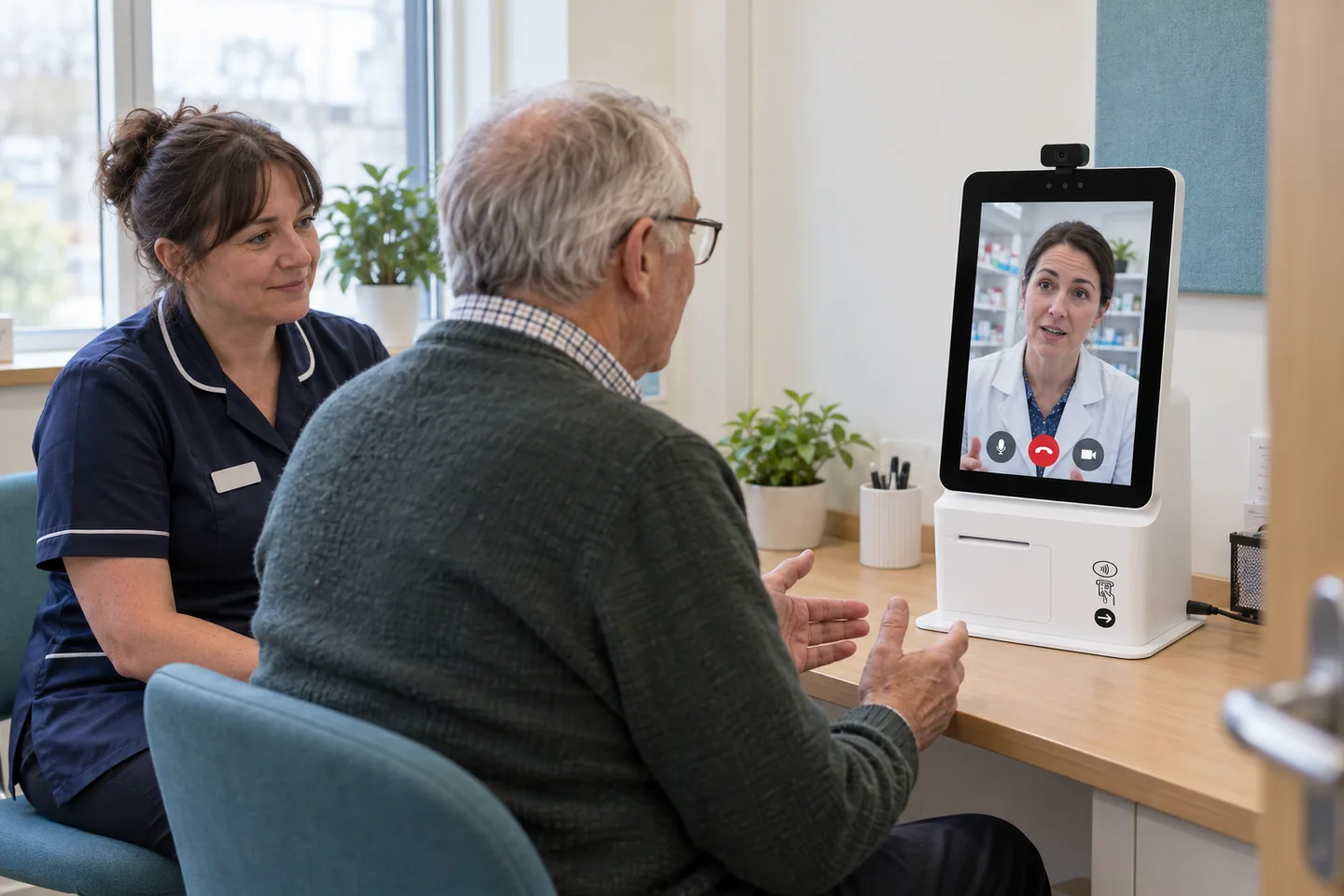
Choose one question the pilot can answer
A useful question is specific: can an agreed remote session add usable consultation capacity at selected sites without increasing unfinished records or burdening the on-site team? A vague aim such as transforming clinical services invites a report full of activity with no clear decision at the end.
Write a one-page plan covering participating sites, services, session times, accountable lead, evaluation period and the decision date. Say which arrangements have been approved and which are excluded. The on-site Responsible Pharmacist remains part of the Remote Pharmacist operating model; the pilot does not test replacing that role or remotely supervising dispensing.
Select sites for learning, not a flattering average
Choose sites with enough relevant demand to learn from, but include a realistic range of room layouts, staffing and connectivity. Record why each site was selected. If every location has unusually experienced staff or spare rooms, be clear that the findings may not transfer to the wider group.
Use a short baseline collected with the same definitions you will use during the pilot. Note opening hours, service mix, local referral changes and staff availability. Compare similar periods where possible. If a nearby service closes or a marketing campaign begins, annotate the results rather than attributing the entire change to the new consultation model.
Make readiness a separate decision
Before accepting patients, confirm the service-specific contractual position, workforce arrangements, clinical governance, access permissions and local continuity plan. Software availability is not permission to deliver a service through a particular cross-site arrangement. Resolve that question before treating any projected NHS activity as eligible.
Rehearse a routine consultation and a failed connection with synthetic information. Confirm who helps the patient, who receives an escalation and who ensures the clinical record is complete. Keep a dated readiness record for each site. A group-level approval should not conceal an unresolved problem in an individual consultation room.
Use a small set of defined measures
Choose measures that answer the question rather than everything the dashboard can display. Count appointments offered, started and completed; record waiting time, on-site support minutes, interruptions and unresolved follow-up. Include a short patient and staff feedback process. Ask about ease of use and understanding of the next step, rather than only satisfaction.
Define numerators, denominators and exclusions before collection. For example, a completion rate could be completed consultations divided by started consultations, but you should also show people who could not start. Reporting only successful calls removes the experience of those who struggled with access. Use the KPI guide to build a consistent measure dictionary.
Control the evaluation's own data and governance
Use aggregate information for management reporting wherever it answers the question. Limit access to detailed case review, keep operational and clinical records in their appropriate systems, and explain how feedback will be used. Avoid collecting recordings simply because they might become useful to the evaluation.
The Health Research Authority provides a decision tool for determining whether a project is research. The managing organisation is responsible for that determination. A local service evaluation still needs the appropriate governance review; calling work a pilot does not remove its responsibilities.
Agree how to pause, improve or expand
Set stopping criteria with the clinical and operational leads before launch. Examples to discuss include an unresolved patient-safety concern, repeated inability to access records, or a loss of essential local support. Record who can pause activity, who investigates and what evidence is needed before restarting. These are proposed planning controls, not national numerical thresholds.
At the decision meeting, show the baseline, pilot results, missing data, actual costs and important changes in context. Separate observed improvement from an assumption about its cause. The outcome may be to expand, extend with a specific change, retain only certain sessions or stop. Publish an internal action record with owners rather than a success statement unsupported by the evidence.
Frequently asked questions
Is this a Remote Pharmacist case study?
No. It is a planning framework. It contains no customer results, measured savings or claimed clinical outcomes.
How long should a pilot last?
Choose enough representative sessions to answer the agreed question, including normal operational variation. Set a review date and explain the limits of a small sample rather than relying on a universal duration.
Sources & further reading
Checked against the following sources on 1 October 2026. Service rules and payments can change; use the current specification and Drug Tariff when making decisions.
- Health Research Authority: deciding whether a project is research
- NHS England: outcome, process and balancing measures in improvement (page 36)
- NHS England: determining the applicability of DCB0129 and DCB0160
This is business and service-planning information. It does not assess an individual patient, authorise a delivery model or replace local clinical and contractual decisions. Source checking is not a claim of independent clinical review.
Our editorial policy and corrections processSee it in your consultation room
A practical walkthrough, shaped around your team and the services you want to deliver.