

Product England
A pharmacy consultation platform buying guide
Choose software by testing the work your pharmacy needs to complete. A good demonstration should make the clinical handovers, evidence, costs and limits clear.
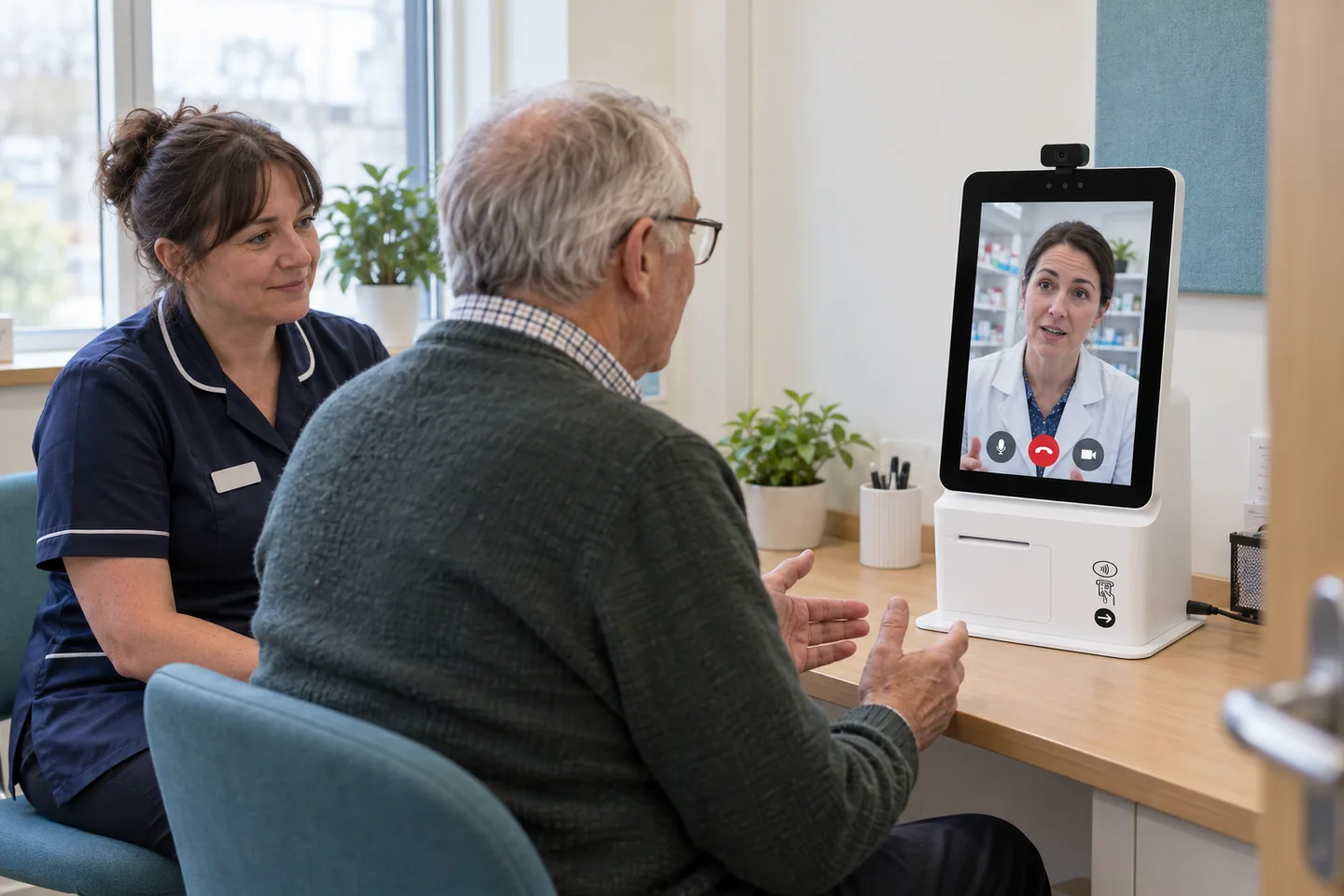
Write a brief based on the service you intend to run
List the services, locations, users and patient journeys the platform must support. Separate essential requirements from preferences. Explain whether patients will attend a pharmacy room or connect from elsewhere, and whether clinicians are employed by your organisation or supplied through another arrangement. These choices affect governance and the practical workflow.
For NHS services in England, confirm the service-specific premises, workforce and claiming conditions before procurement. NMS, for example, has particular restrictions on off-site provision by pharmacists who are not employed by the owner or its group. The current NMS guidance should inform the operating model. Software capability does not override those conditions.
Demonstrate the whole journey
Give every shortlisted supplier the same synthetic scenario. Ask them to show referral or booking, patient arrival, access to relevant information, the consultation, an onward referral, documentation and the handover back to the pharmacy. Then ask what changes when the patient cannot use video or the connection fails.
Ask who performs each step and which system holds the authoritative record. If information must be copied manually, include that time and risk in your assessment. An integration claim needs a concrete demonstration of the systems connected, the fields transferred, failure reporting and the organisation responsible for support. A planned feature should be recorded as planned.
Check clinical safety evidence and its scope
Ask for the supplier's current clinical-safety position, the software version covered, known limitations and the information needed for local deployment assessment. Use the DCB0129 and DCB0160 guide to structure that discussion. Do not replace the evidence review with a badge or a broad statement that a product is suitable for healthcare.
Bring the people who will use the system into the assessment. A feature may be technically present but difficult to find during a busy consultation. Record unresolved risks, who owns each mitigation and which matters prevent go-live. Agree how the supplier will notify you when a change affects your procedures or previously accepted risks.
Ask where data goes and who can access it
Request a clear explanation of hosting, subcontracted services, access controls, retention, exports, backups and deletion. Distinguish live media from stored clinical information, support logs and any optional recordings. Ask what support staff can see and how their access is authorised and reviewed.
The NCSC cloud security guidance provides a framework for evaluating shared responsibilities. Turn answers into specific evidence requests: a role demonstration, a data-flow diagram, a contract term or a recovery test summary. Prefer precise answers about the service offered to a general claim that everything is encrypted or compliant.
Test usability, access and support in your setting
Use the device, room and network the team will actually rely on. Check camera positioning, sound, text size, keyboard access and the process for supporting patients with communication needs. Include a clinician and an on-site colleague in the same walkthrough so neither side's workload is hidden.
Agree support hours, incident routes, response expectations and how a serious clinical or privacy issue is escalated. Ask what happens if the service is unavailable while a patient is waiting. Check how accounts are created and removed when staff change, and who keeps devices and browsers supported. A free trial is useful only when these operational questions are tested too.
Compare total cost and the way out
Build the comparison around the same expected activity and support assumptions. Include implementation, equipment, connectivity, training, subscription, per-use charges, staff administration and any minimum commitment. Identify what happens to charges when a call fails or an appointment is cancelled. Compare quoted terms, not headline prices using different definitions.
Before signing, ask how records can be exported, how long access continues after termination and what assistance is available during a move. Keep the final decision record short: why the option meets your needs, the evidence reviewed, remaining conditions and the named owner of each one. Apply the same questions to a Remote Pharmacist walkthrough as to any other supplier.
Frequently asked questions
Does specialist clinical software automatically satisfy service rules?
No. The pharmacy still needs an authorised operating arrangement, competent staff, appropriate governance and the correct service-specific record and claiming process.
What should we ask to see in a walkthrough?
Use a synthetic patient journey, including a failed connection, a referral and a record correction. Ask the supplier to show the actual workflow and identify anything that is still planned.
Sources & further reading
Checked against the following sources on 1 October 2026. Service rules and payments can change; use the current specification and Drug Tariff when making decisions.
- Community Pharmacy England: NMS and off-site consultation conditions
- NCSC: cloud security guidance
- NHS England: determining the applicability of DCB0129 and DCB0160
- NHS England: video consultation guidance for information governance professionals
This is business and service-planning information. It does not assess an individual patient, authorise a delivery model or replace local clinical and contractual decisions. Source checking is not a claim of independent clinical review.
Our editorial policy and corrections processSee it in your consultation room
A practical walkthrough, shaped around your team and the services you want to deliver.