

Funding & services England
Pharmacy Contraception Service funding and workflow in England
A sustainable contraception service needs private access, an appropriate assessment and a clear supply and recording process. The fees are useful for planning, but should be attached to completed eligible activity.
Keep the two service elements clear
The NHS Pharmacy Contraception Service in England covers initiation and ongoing provision of routine oral contraception, alongside oral emergency contraception introduced in October 2025. Each element has its own clinical requirements. The service specification and patient group directions determine eligibility, the authorised professional's role and what information is needed.
Use booking wording that makes it easy for a patient to reach the appropriate conversation without disclosing sensitive information at a public counter. Do not make a promise about supply before assessment. The team should know which appointments can be booked, which requests need prompt attention and how to arrange another service when the pharmacy cannot meet the patient's needs.
Separate consultation fees from startup funding
The October 2026 Tariff provides £25 for an eligible routine oral contraception consultation and £20 for an eligible oral emergency contraception consultation. These are separate consultation categories, not a £25 payment with an automatic £20 supplement. Any claim must reflect the actual service delivered.
Startup funding totals £900 for eligible contractors. The first £400 is paid after the required period following registration; £250 follows the first five consultations claimed, and another £250 follows a further five. Check the precise eligibility and claiming conditions. Put these one-off receipts on separate lines in your budget so they do not inflate the recurring income expected each month.
Design the consultation and supply together
Think through the whole journey: access, eligibility, assessment, any required information or measurements, the decision, supply or referral, the patient record and communication with the GP where required. A diary full of consultations is not useful if medicine availability or an incomplete handover leaves the patient unable to finish the journey.
Assign responsibility for each action and record its completion in the appropriate clinical system. Make sure a colleague covering the service can see what remains outstanding without repeating sensitive questions unnecessarily. Plan privacy, safeguarding and access to appropriate support around the patient, including a practical way to speak without a companion when needed.
Use remote appointments where the requirements can be met
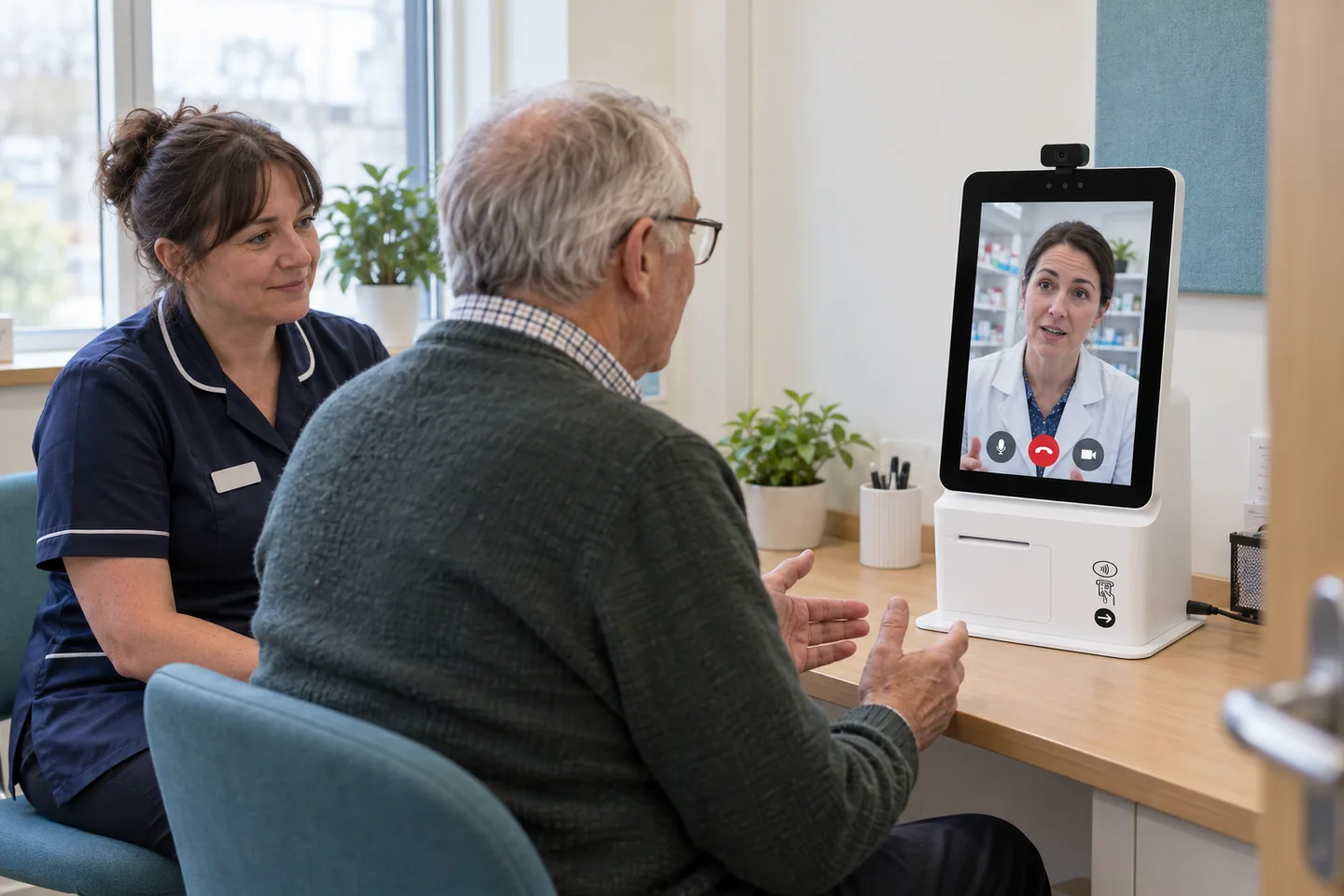
CPE explains that telephone or video consultations can be provided from the pharmacy premises. Remote assessment still has to satisfy the current specification and relevant PGD. Where measurements or other information are needed, establish how suitable evidence will be obtained; do not assume that a phone call or video image supplies everything required.
A patient may prefer a remote conversation but need to attend for part of the process. Explain that at booking and arrange a clear next step. For a proposed external clinician at another site, verify the actual contractual and premises position before promising the service. The remote NMS and contraception guide compares the two services without treating their rules as interchangeable.
Model realistic activity and costs
As an illustration, 12 eligible routine consultations and eight eligible emergency consultations produce £460 in consultation fees: 12 × £25 plus 8 × £20. This excludes startup payments, medicine reimbursement and every delivery cost. It assumes the consultations meet the rules and can be claimed; it is not an income forecast for a particular pharmacy.
Use your own demand, opening hours and staff availability to estimate capacity. Include time for documentation, stock handling, referrals, training and unsuccessful appointments. Review whether patients can obtain the service when they need it, rather than measuring only the number of slots created. A useful business case explains both the expected benefit to patients and the cost of reliably providing it.
Keep claims and service information current
Reconcile completed clinical records with the claim data before the submission deadline. Keep a record of the startup instalments already received and check each branch's position separately. Current service payments can also interact with other participation conditions, including the Pharmacy First monthly-payment requirements, so review the whole service portfolio.
The announced prescribing extension does not replace the current PGDs or make future activity claimable in advance. Check the October prescribing update and the final official documents before changing patient information or opening a new type of appointment. Update staff procedures at the same time as the website so the service described is the one available.
Frequently asked questions
Is contraception startup funding only £400?
No. Eligible startup funding totals £900 in three instalments: £400 followed by two £250 payments linked to consultation milestones. The current Tariff sets the conditions.
Can both consultation fees be added to every appointment?
No. £25 is the routine oral contraception category and £20 is the oral emergency contraception category. Claim only the eligible service actually delivered under the applicable rules.
Can the consultation be by phone?
Telephone or video may be appropriate when the service requirements are met, with provision from the pharmacy premises. Necessary information, measurements and any in-person steps still have to be arranged.
Sources & further reading
Checked against the following sources on 1 October 2026. Service rules and payments can change; use the current specification and Drug Tariff when making decisions.
- Community Pharmacy England: Pharmacy Contraception Service
- NHSBSA: October 2026 Drug Tariff, England service payments
- NHSBSA: current Drug Tariff and amendments
- Community Pharmacy England: prescribing within the CPCF
This is business and service-planning information. It does not assess an individual patient, authorise a delivery model or replace local clinical and contractual decisions. Source checking is not a claim of independent clinical review.
Our editorial policy and corrections processPlan a private, accessible patient journey
Review your consultation-room workflow, staffing and service mix in a short demonstration.