

Pharmacy First England
Pharmacy First records and claims: a practical workflow
A completed call, a completed clinical record and a submitted claim are three different events. Make each one visible, with a named owner and a clear route for exceptions.
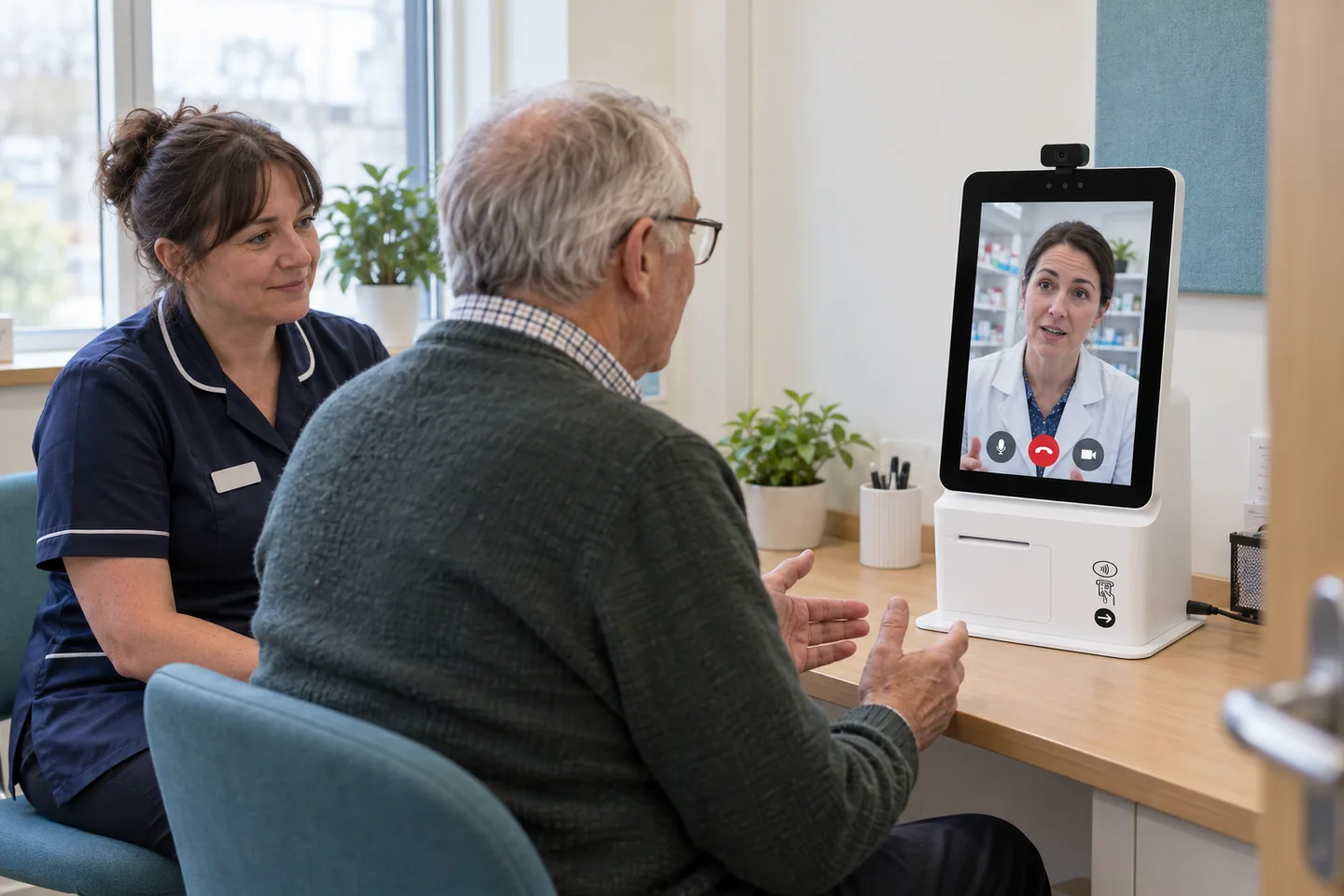
Draw the journey across the systems you use
Start with one fictional patient journey and list each system involved: referral inbox, appointment diary, video connection, NHS-assured clinical system and Manage Your Service (MYS). Beside each step, name the responsible role and the evidence that shows it is finished. This makes it easier to spot a handover that exists only in somebody's memory.
Community Pharmacy England's Pharmacy First guidance explains the requirement for an NHS-assured system and its connection to MYS. A remote consultation platform does not become that assured system simply because it can hold notes or show a completed call. Confirm the actual route used by your pharmacy.
Prepare the record during the clinical encounter
Confirm the patient and referral details in the correct record before starting. Make the information the pharmacist needs available through the authorised route. The clinician should follow the current service documentation and record the assessment, relevant decisions and outcome, including an appropriate onward referral or an outcome without a medicine.
The service specification requires consultation-room IT that supports contemporaneous recording in the NHS-assured system. Avoid a routine of reconstructing clinical notes from a call list later. If an outage creates an exception, follow the agreed continuity process and retain a clear account of what happened.
Close the clinical work before checking the claim
A completion check should cover the patient's next step, any medicines supply or referral, required notifications and outstanding follow-up. Keep responsibility for clinical decisions with the pharmacist. Administrative staff can help identify missing operational steps, but should not rewrite clinical findings to make an entry fit a claim.
Assign responsibility for checking GP notification status and failed messages. A message placed in a queue is different from one successfully sent. If a transmission fails, use the service's agreed alternative and document the action. Build this check into the daily workflow so unresolved notifications do not disappear when the consultation screen closes.
Reconcile three lists with a small exception log
At an agreed frequency, compare service activity in the clinical system, the submissions visible through the claiming route and the eventual payment information. Use consultation references within an appropriately controlled working area. Avoid exporting unnecessary names, symptoms or medicine details to a general business spreadsheet.
The exception log needs a reason, owner, next action and review date. Useful categories include a missing mandatory field, duplicate entry, failed transmission, eligibility query and payment discrepancy. Review the underlying record before making a correction. Preserve the reason for an amendment and avoid creating a second consultation simply to force a new submission.
Keep the claim window visible
NHSBSA states that, from 1 June 2025, late Pharmacy First submissions are only accepted through the final day of the month after the consultation month. Its claim-window notice also describes a restricted exception for evidenced IT failures outside the contractor's control. Do not build the normal workflow around that exception.
Check the current Drug Tariff and your system's submission instructions for the ordinary monthly timetable. Put the relevant dates in a shared calendar with a named deputy. Review open exceptions well before the final deadline, allowing time to contact the supplier and check that the correction has actually been accepted.
Test failures before they affect a patient
Use synthetic records in an appropriate test environment to walk through an interrupted connection, an unavailable clinical system, an incorrect referral and a rejected transmission. Ask the team to explain how they would protect the patient, preserve the record and find support. A flowchart is useful only if people can follow it on a busy day.
Keep evidence of incidents and supplier tickets in the approved support process, without putting identifiable clinical information into unrestricted email or screenshots. Track recurring causes and change the workflow when necessary. For the commercial interpretation of accepted activity, use the separate Pharmacy First payments guide; this article is about operational control, not a guarantee of payment.
Frequently asked questions
Does a completed remote consultation automatically create an NHS claim?
No. Clinical eligibility, documentation, the assured IT route and the submission process must all be satisfied. Check the claim status in the systems your pharmacy actually uses.
Can an IT outage justify submitting late?
NHSBSA describes an exception requiring evidence and investigation. Keep a timely incident record and seek guidance; do not assume an outage automatically authorises late payment.
Sources & further reading
Checked against the following sources on 1 October 2026. Service rules and payments can change; use the current specification and Drug Tariff when making decisions.
- Community Pharmacy England: Pharmacy First delivery, IT and claims
- NHS England: Pharmacy First service specification (PDF)
- NHSBSA: Pharmacy First claim window from June 2025
This is business and service-planning information. It does not assess an individual patient, authorise a delivery model or replace local clinical and contractual decisions. Source checking is not a claim of independent clinical review.
Our editorial policy and corrections processSee it in your consultation room
A practical walkthrough, shaped around your team and the services you want to deliver.