

Staffing & capacity England
Remote pharmacist or a second on-site pharmacist: choosing the right capacity
These options add different kinds of capacity. Start with the work that is constrained, then compare the staffing, governance and costs needed to complete it safely.
Name the gap in your rota
There is a difference between needing cover for an absent pharmacist and needing protected consultation time during a busy afternoon. The first is a staffing requirement for the pharmacy's operation. The second may be a service-capacity problem, but it can also arise from limited room availability or too little support for the person using that room.
Before comparing suppliers, record the work that is delayed and when it happens. Include dispensing, consultations, supervision, follow-up and record completion. Ask which tasks genuinely require another pharmacist in the building. Our capacity planning guide gives a practical way to collect that baseline.
Understand what physical presence adds
A second employed or locum pharmacist can undertake agreed duties on site within their competence and the pharmacy's governance arrangements. Their role might cover a mix of consultation, dispensing and operational work. Any Responsible Pharmacist arrangements still need to be made correctly; do not treat the extra person as automatic cover without agreeing responsibilities.
Compare the proposed job or session as a whole. An on-site pharmacist may provide value beyond the number of consultations they complete. Counting only consultation income can understate the work they do to support the rest of the pharmacy. Include the benefit you actually need in the brief and the cost comparison.
Define remote capacity narrowly enough to assess it
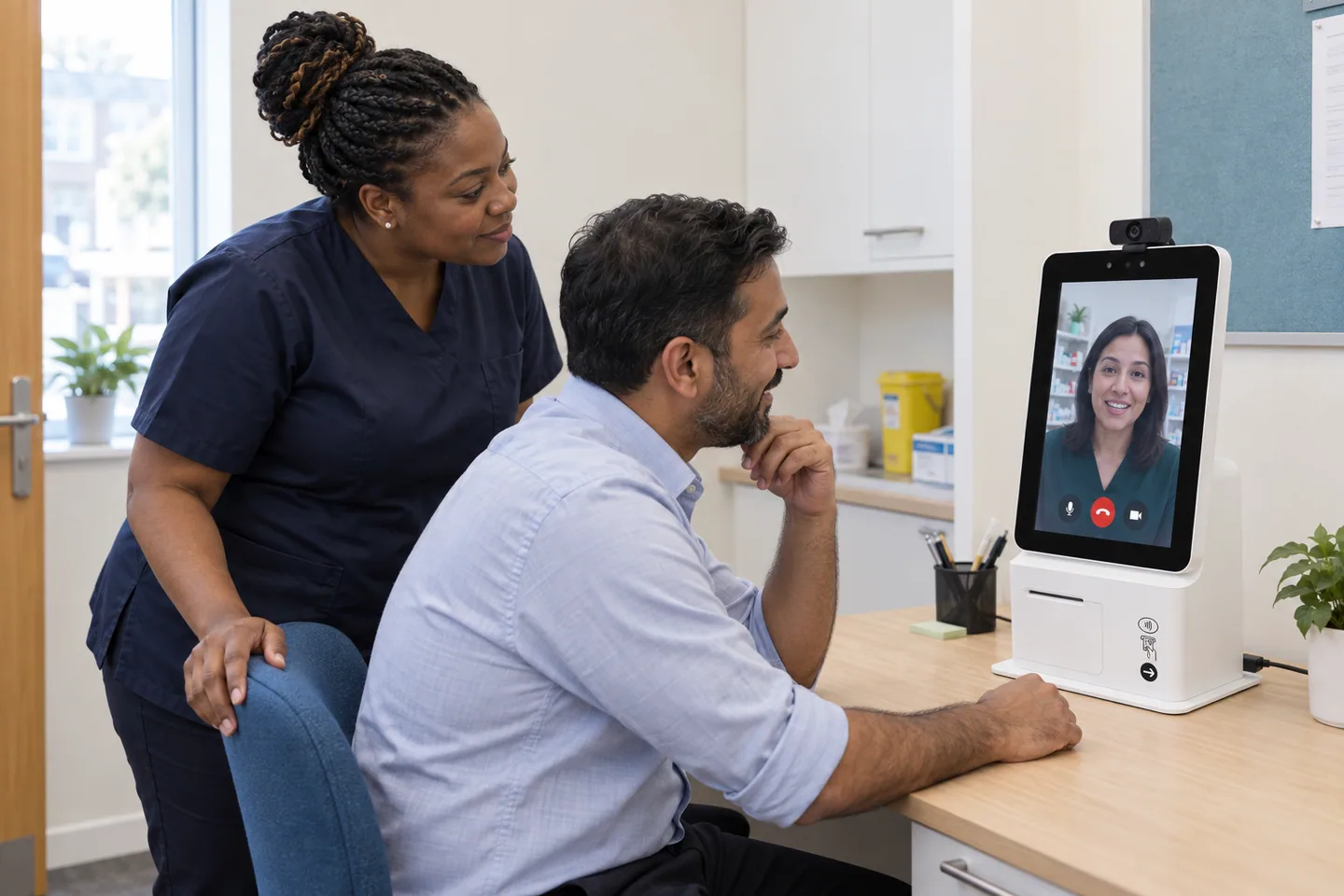
Remote consultation capacity provides clinician time through a supported connection for services and patients suited to that arrangement. In the Remote Pharmacist model, the on-site Responsible Pharmacist remains on the premises. The service does not provide remote dispensing supervision or substitute for required on-site cover.
A remote clinician also needs an authorised route to the relevant information, suitable premises and working arrangements for the service, and a clear way to escalate. Those details should be agreed before building a rota around remote sessions. Having a working video link is only one part of the operating model.
Check each service rather than using a blanket rule
The rules differ between NHS services in England. Pharmacy First guidance sets specific premises and consultation-method requirements. It does not follow that any off-site pharmacist can provide activity for any pharmacy simply because the patient and clinician can connect.
For NMS, off-site remote provision has direct-employment or same-group conditions and requires access to necessary records. Confidential off-site delivery can be permitted, so the old blanket statement that every remote pharmacist must work from registered pharmacy premises was too broad. Check the exact arrangement for the service before treating it as eligible.
Compare like-for-like costs
Request current quotes for the hours, duties and notice period you need. For employment, include the relevant employment and cover costs. For locum sessions, include contractual minimums and cancellation terms. For remote sessions, include the charging basis, equipment, platform fees, implementation and the supporting team's time.
Remote capacity is not automatically priced per completed consultation, and on-site cover is not always a full-day commitment. Both depend on the actual contract. Test lower utilisation and cancelled sessions, and separate extra consultation income from activity your existing team would have delivered anyway. The consultation capacity plan helps identify the staff time and room availability needed to deliver the proposed NHS service activity.
Use a limited comparison to make the decision
Set out the options against the same demand baseline: existing arrangements with a process change, extra on-site time, or an approved remote consultation session. Compare room use, staff workload, patient access and total cost. A combination may be appropriate where different time periods have different needs.
Keep clinical suitability separate from the commercial result. Onward referral and an outcome without a medicine may be the right care, even when they do not produce the income someone modelled. Review the decision after a defined period using actual activity and feedback, rather than assuming additional capacity guarantees additional revenue.
Frequently asked questions
Can remote consultation capacity cover an absent Responsible Pharmacist?
No. Remote Pharmacist's model retains the on-site Responsible Pharmacist and does not provide replacement cover or remote dispensing supervision.
Is a remote pharmacist always cheaper?
No. Compare actual quotes, utilisation and support costs for the work you need. Different contracts and service arrangements can produce different results.
Sources & further reading
Checked against the following sources on 1 October 2026. Service rules and payments can change; use the current specification and Drug Tariff when making decisions.
- Community Pharmacy England: Pharmacy First delivery, IT and claims
- Community Pharmacy England: NMS and off-site consultation conditions
- GPhC: standards for registered pharmacies in Great Britain
This is business and service-planning information. It does not assess an individual patient, authorise a delivery model or replace local clinical and contractual decisions. Source checking is not a claim of independent clinical review.
Our editorial policy and corrections processSee it in your consultation room
A practical walkthrough, shaped around your team and the services you want to deliver.