

Funding & services England
Hypertension Case-Finding Service: funding and in-person requirements
Hypertension case-finding combines clinical measurements, follow-up and communication with general practice. Plan the equipment and on-site workflow before counting the income.
Use the September 2026 specification
England's Hypertension Case-Finding Service identifies people who may have previously undiagnosed hypertension and supports the specified referral arrangements. The revised specification took effect on 3 September 2026. CPE's change briefing and the NHS England flowcharts are useful starting points for updating a pharmacy's procedures.
The core case-finding group is adults aged 40 and over without an established hypertension diagnosis, subject to the current requirements, with specified exceptions and referral routes. Normally only one eligible clinic check can be claimed in five years; an exceptional repeat needs to meet the specification and have its justification recorded. Check previous testing before enrolment. Where an ABPM referral already includes a clinic reading, do not repeat that clinic measurement in the pharmacy simply to add another claim.
Understand the three funding lines
The October 2026 Drug Tariff sets £10 for an eligible clinic check and £50.85 for eligible ambulatory blood-pressure monitoring, or ABPM. There is also a £440 one-off setup fee for eligible contractors. ABPM should follow the service's clinical requirements; it is not an automatic paid addition to every clinic check.
As a simple illustration, 30 eligible clinic checks and six eligible ABPM episodes produce £605.10 in service fees before costs. That assumes the activity is appropriate, completed and claimable. Keep setup income outside the recurring calculation, and account for equipment purchase, maintenance, staff training, fitting and collection time, record keeping and communication with the GP.
Plan the physical work in the pharmacy
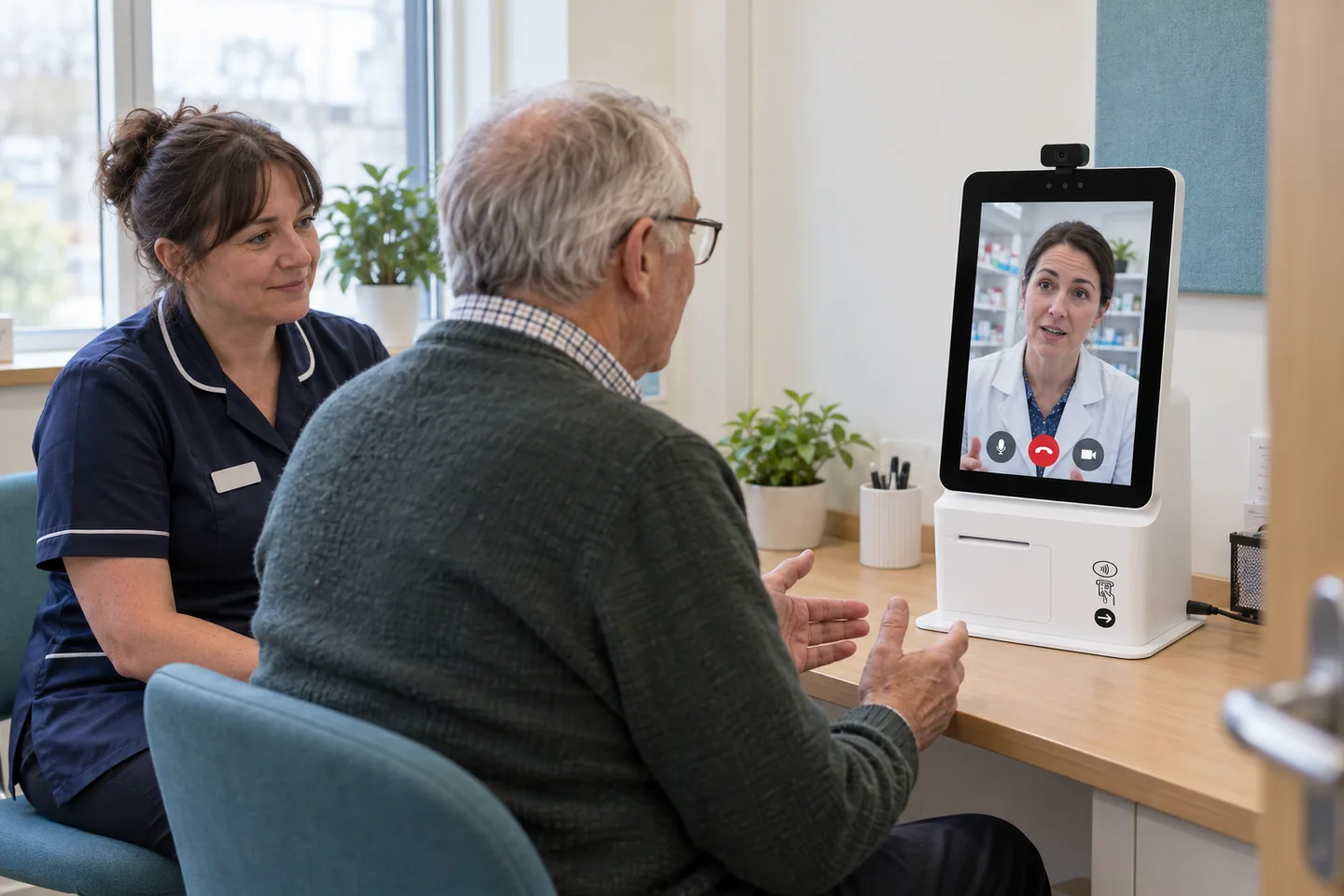
Reliable blood-pressure measurement needs the appropriate device, technique, environment and trained staff. ABPM also needs a monitor to be fitted and a process for returning and interpreting the recorded information through the service pathway. A remote clinician can contribute only within a compliant arrangement; a video screen cannot perform these physical steps.
Walk through the room layout with the people who will deliver the checks. Ensure the patient can sit comfortably, equipment is ready and interruptions are controlled. For ambulatory monitoring, decide who explains the process, handles fitting, manages the return and identifies a missing or incomplete recording. Include device availability in the appointment plan rather than booking against staff time alone.
Agree the GP handover before increasing activity
The value of case-finding depends on what happens after the reading. Use the current service flowcharts for assessment, referral and urgency; this article is a business-planning guide rather than a replacement for those clinical instructions. Staff need a clear route for both routine communications and concerns requiring prompt action.
Agree how results are sent, where acknowledgements or responses are recorded and who follows up an unsuccessful handover. Test the contact details and the process during normal working hours before depending on them. A completed measurement and an unresolved referral should not disappear together under a single 'appointment complete' status. Keep the outstanding action visible to the responsible team.
Use the right people and realistic appointment capacity
The service can involve appropriately trained and competent pharmacy staff within the specification and local procedures. Define roles around the actual tasks rather than assuming every appointment needs the same professional input. Make supervision, access to advice and escalation clear, including when the usual service lead is absent.
Capacity depends on equipment, room availability, staff competence and follow-up work. Track the time needed to prepare, perform and document a check as well as the consultation itself. Review missed returns and unusable recordings as operational issues. Those activities use resources even when they do not result in an additional payable service. This produces a better estimate of sustainable capacity than a fee multiplied by available diary slots.
Connect funding, claiming and wider services
Record the service in the required assured system and reconcile the information transferred for claiming through Manage Your Service. Confirm the claim before the current deadline and investigate differences between completed activity and payments. Keep evidence of the setup fee position for each contractor so it is not treated as repeatable income.
Registration and the ability to provide hypertension checks also form part of the current Pharmacy First monthly-payment conditions, subject to the specified distance-selling pharmacy exception. Review that link in the Pharmacy First funding guide. A registered service should represent genuine operational readiness, with equipment and staff available to deliver it.
Frequently asked questions
Can a remote terminal replace the blood-pressure check?
No. The required physical measurements and any ambulatory-monitor fitting must still be carried out appropriately. Technology may support communication and administration within an eligible service model.
Does every clinic check earn an ABPM payment too?
No. ABPM must be clinically appropriate and meet the service's eligibility and completion rules. It is not an automatic supplement.
Which specification should we use?
Use the current NHS England specification and flowcharts, including the changes effective from 3 September 2026, rather than an older summary.
Sources & further reading
Checked against the following sources on 1 October 2026. Service rules and payments can change; use the current specification and Drug Tariff when making decisions.
- Community Pharmacy England: Hypertension Case-Finding Service
- Community Pharmacy England: September 2026 hypertension specification changes
- NHSBSA: October 2026 Drug Tariff, England service payments
- NHSBSA: current Drug Tariff and amendments
This is business and service-planning information. It does not assess an individual patient, authorise a delivery model or replace local clinical and contractual decisions. Source checking is not a claim of independent clinical review.
Our editorial policy and corrections processReview how your room supports each service
Map the on-site tasks, equipment and consultation workflow before choosing additional technology.