

Patient experience England
Supporting patients before, during and after a video consultation
The screen should make a consultation possible without making the patient manage the technology. Plan the human support, privacy and alternatives with the same care as the call itself.
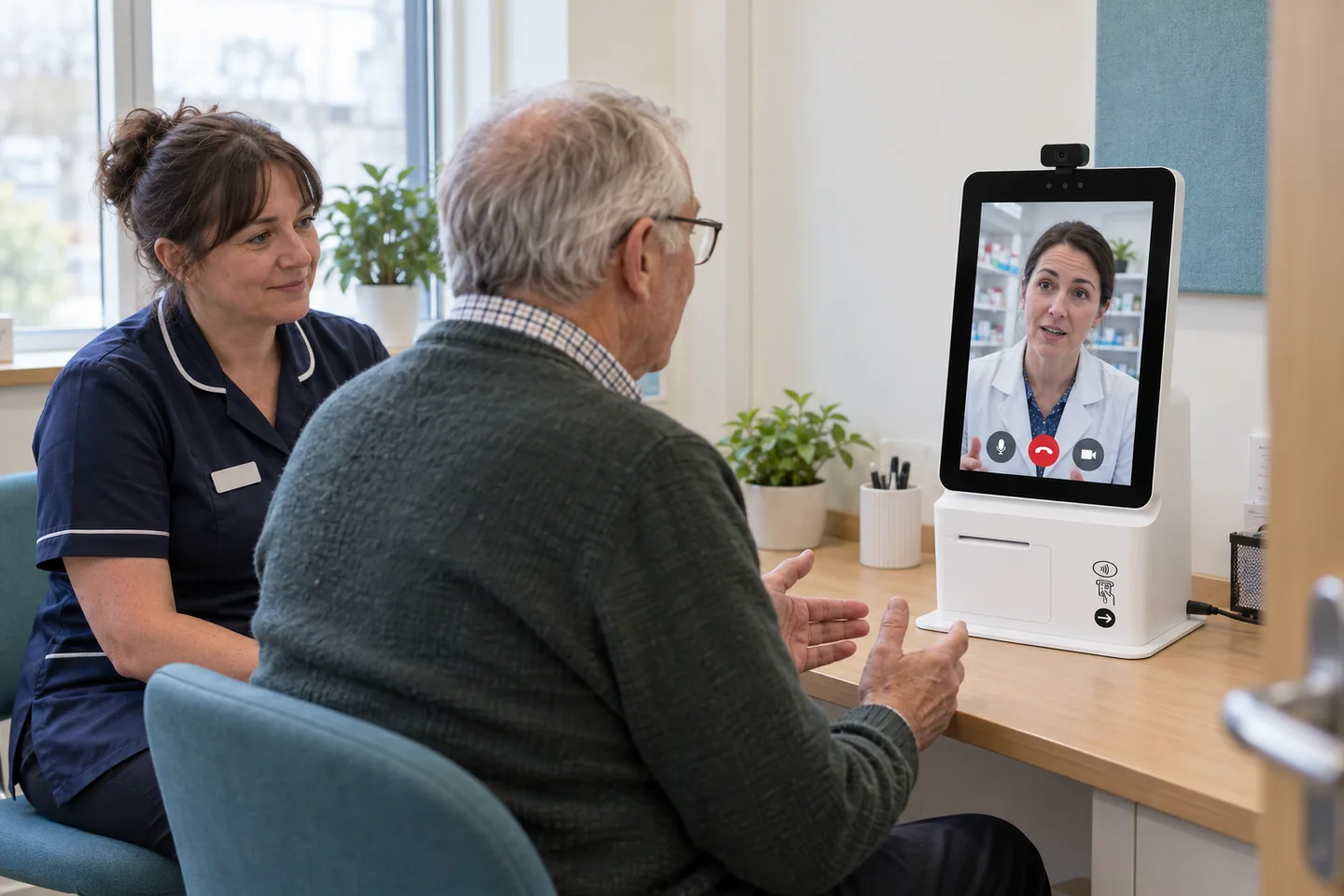
Explain what will happen before starting
A short explanation helps the patient decide whether the proposed arrangement works for them. Say who the pharmacist is, where the conversation will take place, what the on-site colleague will do and how the patient can ask for help. Avoid describing a video appointment as automatically quicker, better or clinically equivalent for every situation.
Invite questions about privacy and the purpose of the consultation. Check whether the person wants a companion present and whether a private conversation is needed for part of the appointment. Supporting someone with the device does not mean staying in the room for every clinical detail. Agree how the patient can bring staff back if they need assistance.
Ask about communication needs early
For NHS services in England, the Accessible Information Standard covers information and communication needs arising from disability, impairment or sensory loss. Its approach includes identifying, recording, flagging, sharing, meeting and reviewing those needs. A person's diagnosis alone does not tell the team what support will work.
Ask a practical question such as what would help the person follow the conversation. They may need a hearing loop, larger text, more time or professional communication support. Plan language interpretation separately where needed. Do not assume that a relative is always a suitable interpreter, or that automated captions are sufficient for a clinical conversation.
Make the room comfortable and private
Check that the patient can sit comfortably, see the pharmacist and hear without straining. Position the camera at a useful height and avoid bright light behind the patient. Clear unrelated paperwork and screens from view. Check whether a speaker can be heard outside the room and agree a suitable audio arrangement.
Offer a brief, non-clinical sound and picture check before handing over. Let the patient practise asking for the volume to change or the explanation to be repeated. If the technology is causing distress, pause. A supported change to another suitable consultation method is a better outcome than pushing through an unusable call to keep the diary moving.
Keep the patient central during the handover
Introduce the remote pharmacist and the on-site colleague by name and role. Pass on agreed access needs through the appropriate confidential channel. The pharmacist should establish that the consultation method is suitable and follow the service's identity, consent and assessment requirements. Staff should support that process without answering for the patient.
Avoid side conversations between staff that the patient cannot follow. Explain a pause if information is being checked and ask permission before bringing another person into the conversation. Where the patient has chosen a supporter, continue addressing the patient directly. Check whether the supporter can hear and understand without exposing information to anyone outside the intended consultation.
Have a calm recovery plan
Agree in advance how staff will recognise a failed connection and help the patient. Keep contact and escalation arrangements available to the team. If the call stops, explain the next step rather than asking the patient to repeatedly press buttons without knowing whether the pharmacist is still present.
The appropriate recovery depends on the service and the clinical situation. Some encounters need an in-person assessment; some can use another approved remote method. For Pharmacy First clinical pathways, telephone-only completion is not the default substitute for failed video. The clinician should decide the safe route within the current service rules, with on-site support while that is arranged.
Finish with an understandable next step
Before the patient leaves, check that they understand what was agreed, who will act next and how they should seek further help. Ask them to explain the plan in their own words, without making it feel like a test. Provide information in the format they need and make any follow-up arrangements clear.
Ask for brief feedback about the experience, including whether support was available and whether the patient felt able to speak privately. Use feedback from people who declined or could not complete video as well as those who finished. The NHS community pharmacy video guidance is a useful practical starting point, read alongside current service specifications.
Frequently asked questions
Must a staff member remain in the room throughout?
Plan support around the patient's needs, privacy and the clinical situation. Agree when staff will stay, step out or return, and make it easy to ask for help.
What if a patient does not want a video consultation?
Explain suitable available alternatives and arrange the appropriate next step. Do not treat a preference or access need as a technical problem the patient must overcome.
Sources & further reading
Checked against the following sources on 1 October 2026. Service rules and payments can change; use the current specification and Drug Tariff when making decisions.
- NHS England: Accessible Information Standard requirements (DAPB1605)
- NHS England: Accessible Information Standard implementation guidance
- NHS England: remote and video consultations for community pharmacy teams (2022 guidance)
- Community Pharmacy England: Pharmacy First delivery, IT and claims
This is business and service-planning information. It does not assess an individual patient, authorise a delivery model or replace local clinical and contractual decisions. Source checking is not a claim of independent clinical review.
Our editorial policy and corrections processSee it in your consultation room
A practical walkthrough, shaped around your team and the services you want to deliver.